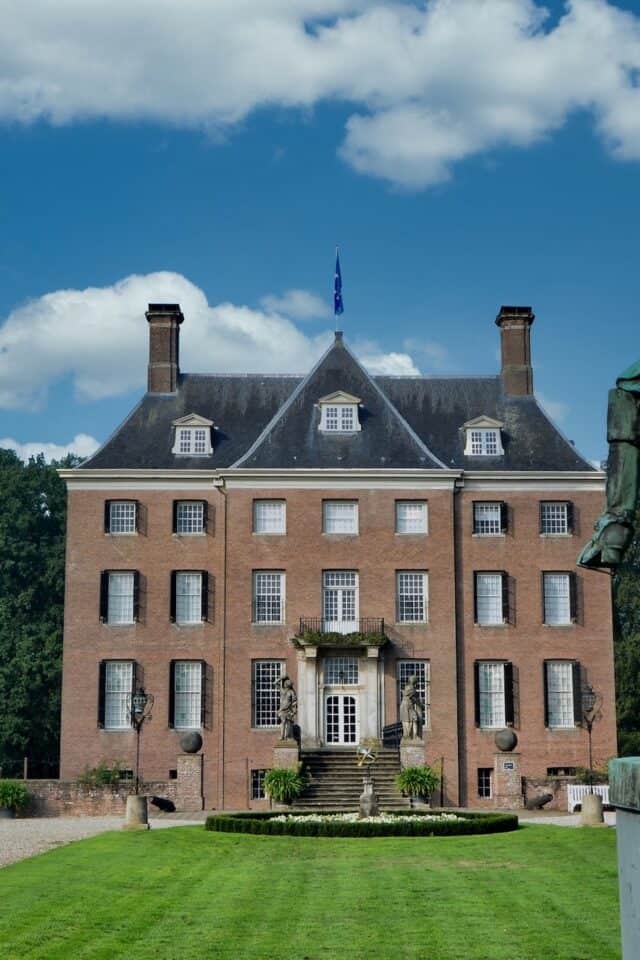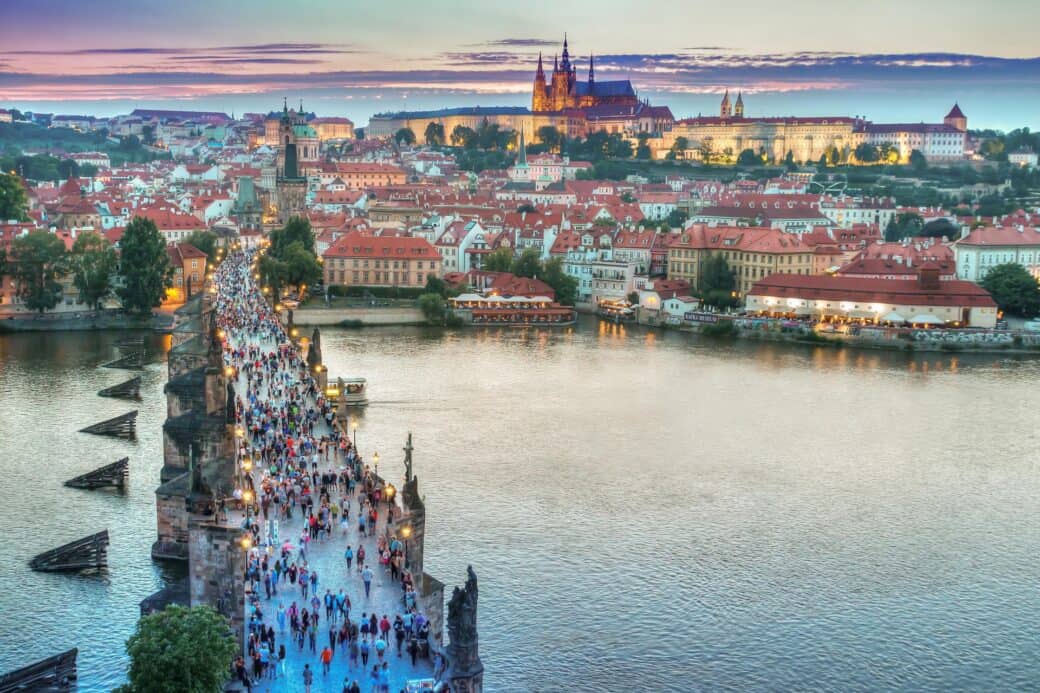
Prague is surrounded by some of the most beautiful castles in Europe, but most visitors never make it past the city walls. Many have heard of Karlštejn, and it is indeed a castle not to be missed. But Bohemia has so much more beauty to offer! There are more than 2,000 castles and palaces in the Czech Republic. Here are five of them near Prague that deserve a place on your itinerary.
1. Konopiště — The Best-Kept Castle near Prague
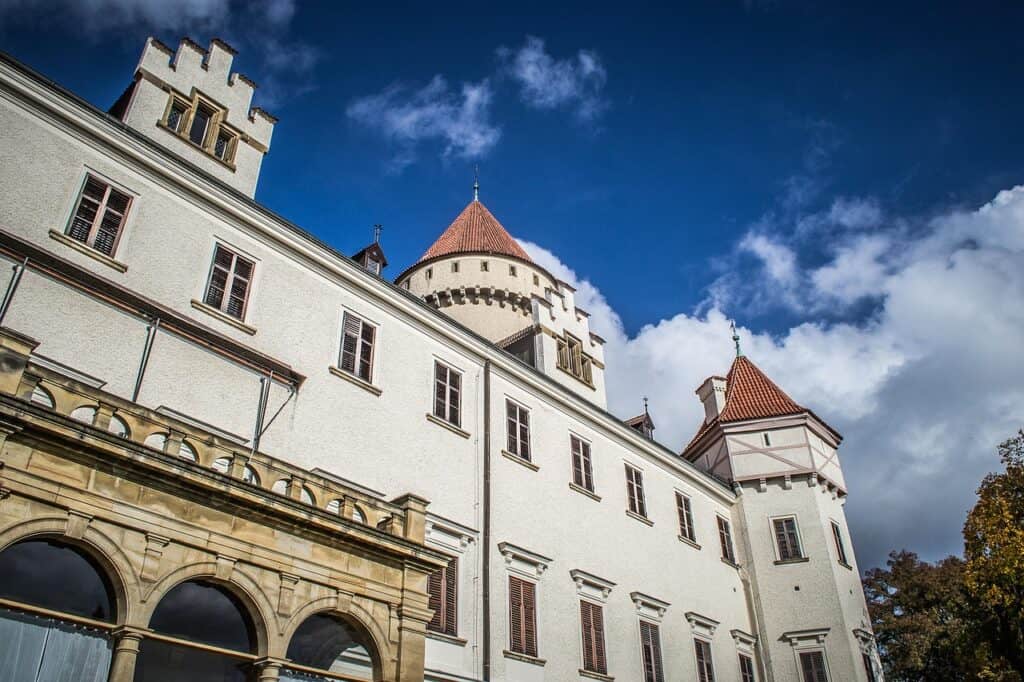
Distance from Prague: ~50 km south (approx. 45 minutes by car or 40 minutes by train to Benešov, then a 2.5 km walk)
Of all the castles near Prague, Konopiště carries the most extraordinary historical weight. This was the private home of Archduke Franz Ferdinand of Austria, heir to the Austro-Hungarian throne. He was the one that was assassinated in Sarajevo in June 1914, which set the world on fire. The bullet that killed him is now on display in a museum on the castle grounds. And yet Konopiště, before history intervened, was simply where Franz Ferdinand and his wife Sophie were happiest, preferring it to the imperial grandeur of the Belvedere in Vienna.
What makes a visit so compelling is the sheer intimacy of the place. The archduke transformed the old Gothic fortification between 1889 and 1894 into a luxurious late 19th-century residence, complete with one of the first electric lifts ever installed in a Czech castle, running water, and electricity throughout. The interiors have survived almost entirely intact: room after room of original furniture, paintings, porcelain, and Franz Ferdinand’s vast collection of hunting trophies, covering the walls from floor to ceiling. The armoury alone contains one of the most significant collections of medieval weapons in Central Europe, including a Renaissance shield stolen by the Nazis, which eventually found its way to Philadelphia before being identified by a Czech historian and returned.
The 225-hectare English landscape park is equally worth your time. Terraces, a rose garden, Italian Renaissance statues, and a population of peacocks, pheasants and quails roaming freely through the grounds give Konopiště a character quite unlike any other castle in Bohemia. In the moat, incidentally, lives a bear named Jiří.
Don’t miss: The Tour III, which covers the armoury and gives the fullest picture of Franz Ferdinand as collector and personality. Book ahead — English-language tours are available but less frequent than Czech ones.
Practical: Open April to October, closed Mondays. Restaurant, café, bistro and chocolate factory on site. See zamek-konopiste.cz for opening hours, tours and tickets.
2. Křivoklát Castle — Gothic in the Forest
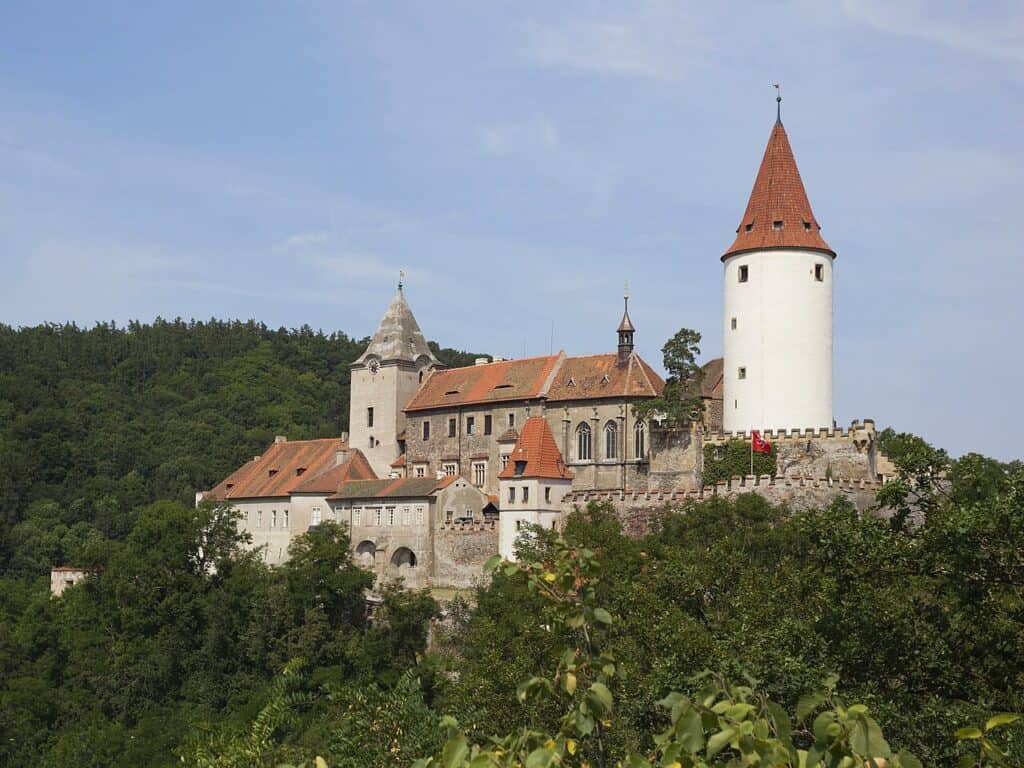
Distance from Prague: ~45 km west (approx. 1 hour 15 minutes by train from Praha hlavní nádraží)
Yes, there are more famous castles than Křivoklát. There are grander ones, and more visited ones. But few have a setting quite like this: a genuine Gothic castle rising above the forested valley of the Berounka river, within the protected landscape area of Křivoklátsko, one of the largest contiguous forest areas in Bohemia. Indeed, a castle country as it ought to look.
Křivoklát’s origins go back to the 12th century, when the Přemyslid kings used the site as a hunting lodge. It grew into one of the most important royal castles in Bohemia, shaped over the centuries by the Přemyslids, Luxembourgs and Jagiellons. Then its fortunes turned. A series of fires weakened the structure, and by the time the Fürstenberg family acquired it, Křivoklát had become something darker: a feared prison. The Rudolfine alchemist Edward Kelley — an Englishman who convinced Emperor Rudolf II he could transmute base metals into gold — was imprisoned here. So was Bishop Jan Augusta of the Czech Brethren, who spent sixteen years in the castle’s dungeons.
The Fürstenbergs eventually saved Křivoklát from ruin with a 19th-century restoration, and today’s tours reveal one of the most complete medieval castle interiors in the Czech Republic. Do not miss the Gothic Castle Chapel,the Royal Hall and the Knight’s Hall, that contains exceptional collections of medieval painting and sculpture. The library holds 52,000 volumes. And for those who prefer their history darker, the prisons and torture chambers are open to visit as well.
Tip: The Great Tower, which houses hunting collections and offers panoramic views over the surrounding forest.
Practical: Open year-round. Steam locomotives run from Prague and Plzeň during holiday periods. Refreshments available on site. See hrad-krivoklat.cz for opening times and tours.
3. Český Šternberk — A Castle Still Lived In
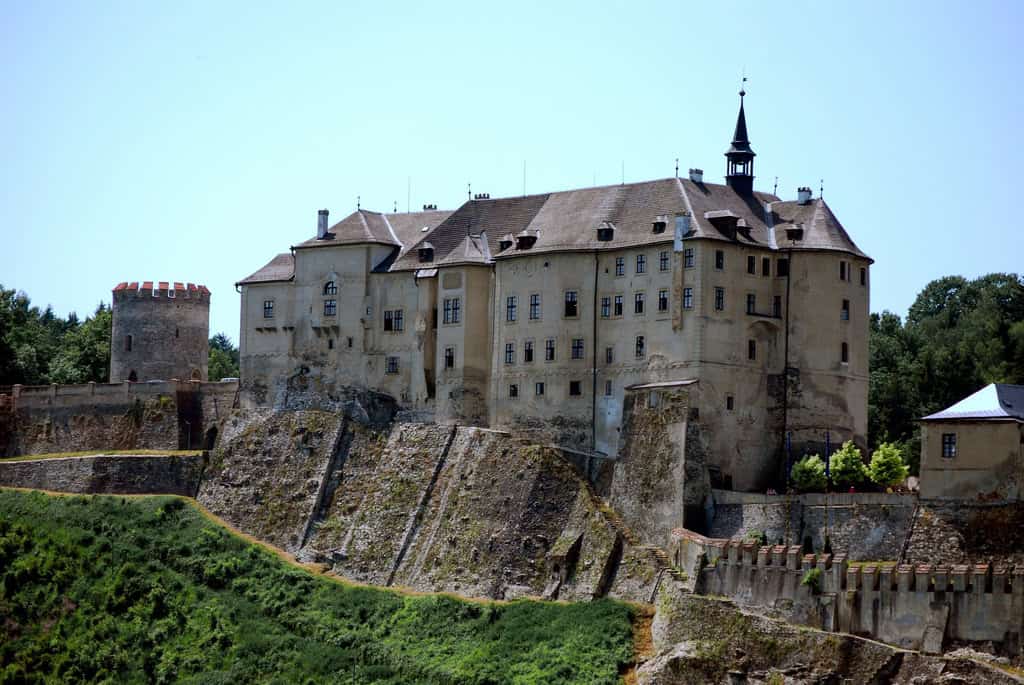
Distance from Prague: ~39 km southeast (approx. 1 hour by car; train to Sázava + short bus or taxi)
There’s something fundamentally different about visiting a castle that is still someone’s home. Český Šternberk — perched on a dramatic granite cliff above the Sázava river — has been owned and inhabited by the same noble family for almost 800 years. Today it is managed by Filip Sternberg, whose family reclaimed the castle after the fall of Communism in 1992 following decades of communist nationalisation.
The castle was founded in 1241 by the Bohemian nobleman Zdeslav z Divišova, who took the name “of Sternberg” from his coat of arms — a golden eight-pointed star. It is considered one of the best-preserved Gothic castles in Bohemia, though like most Czech castles it has accumulated layers of history: Gothic foundations, Renaissance reinforcements, Baroque additions. What it has not accumulated, remarkably, is the anonymous institutional feeling of a state museum. Český Šternberk feels inhabited, because it is.
The story of how the Sternberg family survived communism is extraordinary in itself. Jiří Sternberg, who would have been the rightful owner after nationalisation in 1949, was permitted by the communist government to remain in the castle — not as its owner, but as an employee, giving guided tours of his own home. He did this for decades. His son Zdeněk eventually reclaimed the castle after 1989. The continuity of family and castle, across eight centuries and through one of the more brutal chapters of modern European history, gives a visit to Český Šternberk a resonance that is genuinely rare.
Don’t miss: The views over the Sázava river from the castle walls — the setting alone justifies the journey.
Practical: Open seasonally; check ahead for tour schedules, which are managed by the family. See hradceskysternberk.cz for current visiting information.
4. Průhonice Castle & Park — A UNESCO Secret
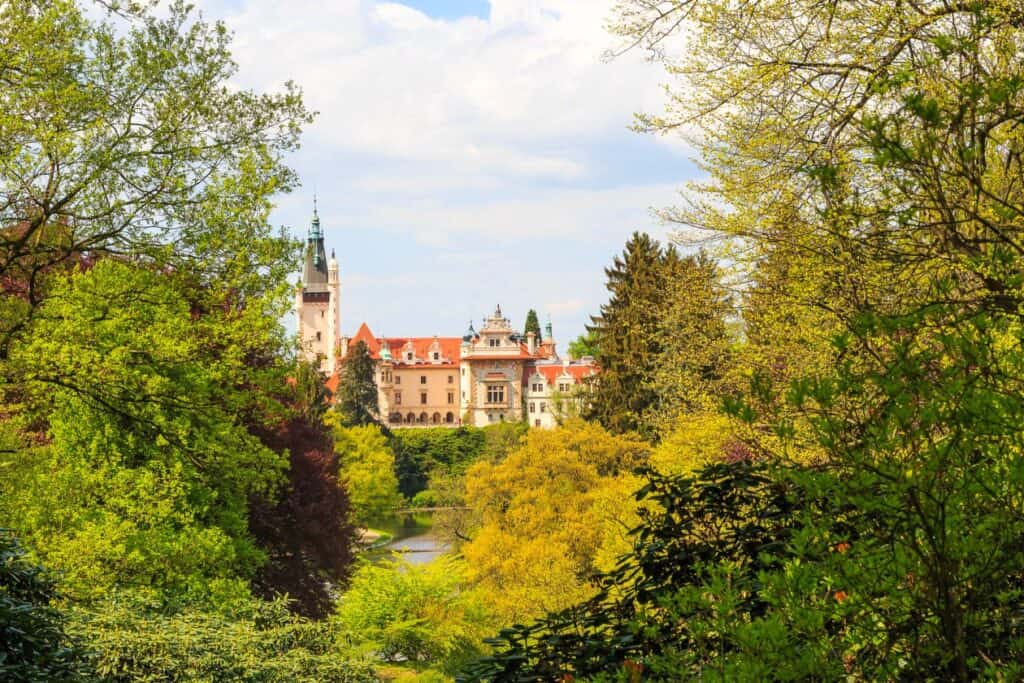
Distance from Prague: ~12 km southeast of the city centre (approx. 20 minutes by car or accessible by public transport)
Průhonice is the closest castle on this list to central Prague, and arguably the least well-known outside the Czech Republic. That is remarkable, given that its park is a UNESCO World Heritage Site (one of only a handful in the Czech Republic) and that the grounds are home to the Botanical Institute of the Academy of Sciences of the Czech Republic, staffed by the country’s leading plant scientists.
The castle itself is a handsome neo-Renaissance structure, rebuilt in its current form in the late 19th century. But it is the park that is the real reason to visit. At 244 hectares, it is one of the largest English landscape parks in Central Europe, and its extraordinary botanical variety is the result of both deliberate planting and the area’s unique microclimate. The valleys and streams create conditions for an astonishing range of plant life: some corners feel almost subtropical; others, with their rocky outcrops and alpine species, feel like the foothills of the Alps. Spring, when the rhododendrons and azaleas are in bloom, is particularly spectacular.
For most international visitors, Průhonice remains completely off the radar — which means you can experience a UNESCO World Heritage landscape just twenty minutes from Prague almost entirely without crowds.
Don’t miss: The castle pond and the valley walks, which give the best sense of the park’s scale and variety.
Practical: The park is open year-round. Castle interior access varies — check current visiting information at pruhonickypark.cz.
5. Nelahozeves Château — A Dvořák village and a private art collection
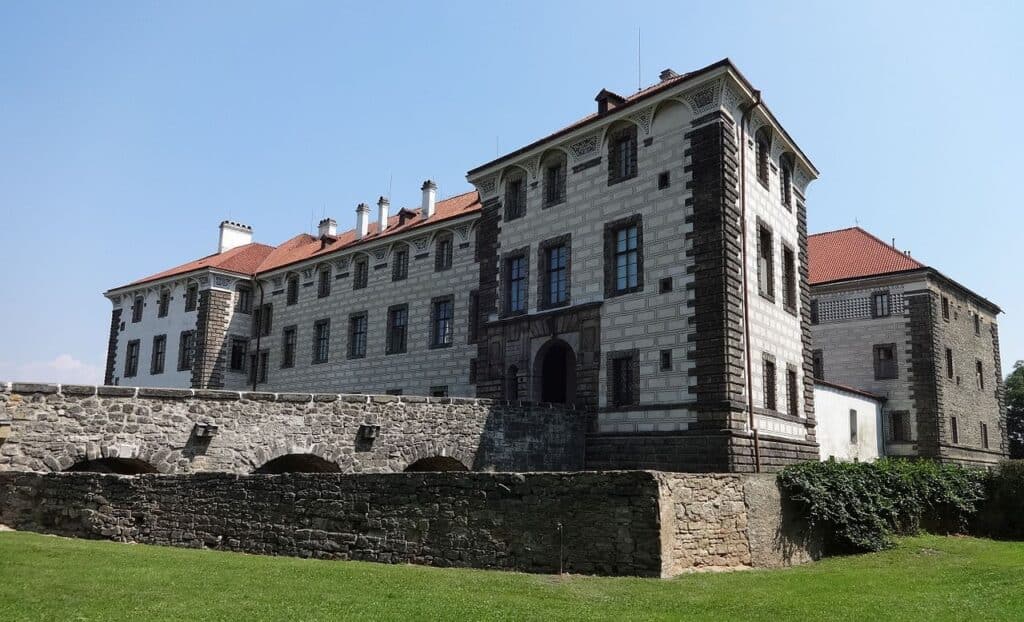
Distance from Prague: 35 km north (approx. 40 minutes by train from Prague Main Railway Station)
There are two reasons to go to Nelahozeves, and they have almost nothing to do with each other. The first is composer Antonín Dvořák, who was born in this village in 1841 in a modest house that still stands below the château walls. The second is what is inside the château itself: one of the most significant private art collections in Central Europe, with works by Brueghel the Elder, Rubens, Veronese, Canaletto and Cranach the Younger, displayed in twelve period rooms exactly as a Czech aristocratic family would have lived among them in the 19th century.
The château itself is a Renaissance building, constructed between 1553 and 1614 by an Italian architect for a Bohemian nobleman, and it passed through many hands before the Lobkowicz family acquired it in 1623. They held it until the Nazis confiscated it in 1939. After the war it was not returned, because the Communists nationalised it in 1948. The Lobkowicz family got it back in 1993 and opened it to the public four years later.
The collection they had managed to protect and recover is what makes the visit so compelling. This is not a state museum with a representative selection of period furniture. It is the accumulated inheritance of one family across several centuries, with all the personality and quirk that implies: hunting trophies alongside Old Masters, a vast library, unusual arms and armour, and the kind of domestic detail that official museums rarely preserve.
The château sits directly above the Vltava river and the surrounding village, and the combination of Renaissance architecture, river views and the Dvořák birthplace below makes Nelahozeves a full half-day without any effort.
Fun fact: The Lobkowicz family also owns the only private palace within Prague Castle, the Lobkowicz Palace, which houses a separate branch of the same collection. A visit to both on the same trip gives a remarkable picture of what one family managed to protect across five centuries.
Practical: Open year-round, Tuesday to Sunday. Train from Praha hlavní nádraží, journey approximately 40 minutes. Full visiting information at lobkowicz.cz/nelahozeves.
Planning Your Visit
All five castles are within easy reach of Prague. For a single day trip, Konopiště is the most rewarding combination of history, interiors and grounds. For those who prefer walking and nature, Křivoklát (reached by a particularly scenic train journey) is hard to beat. Český Šternberk and Průhonice can be combined in a single day if you have a car. If you love music, art and castles, Nelahozeves is not to be missed!
Bohemia has more than 2,000 castles. You won’t find most of them in any guidebook. And that, dear readers, is precisely the point!