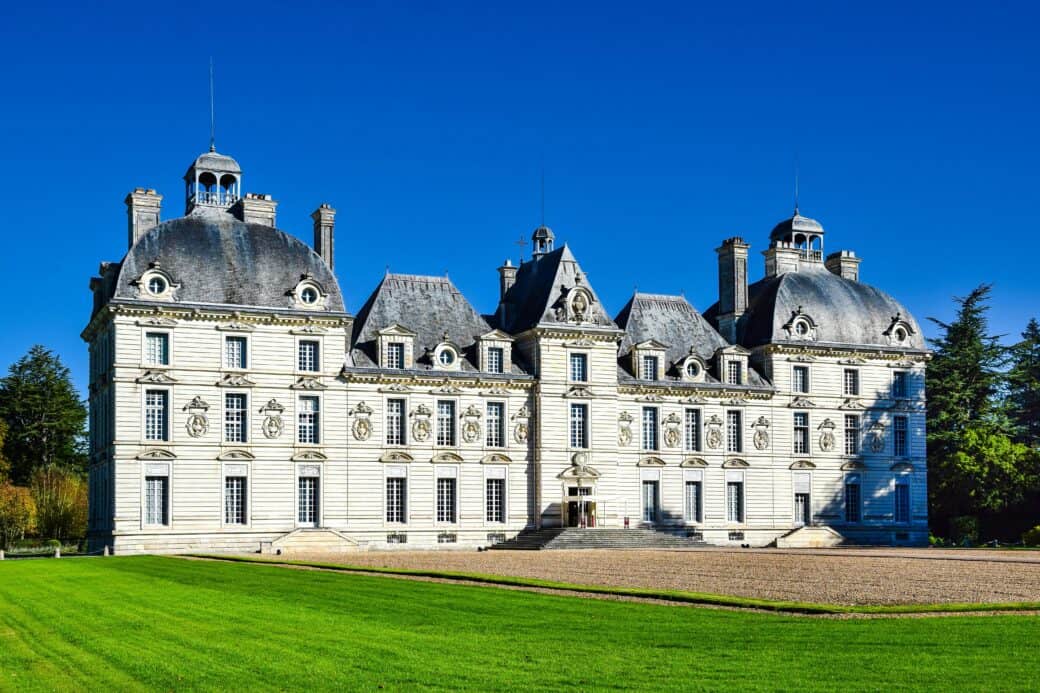
At the Château de Cheverny in Loir-et-Cher, France, gardeners have completed planting half a million tulip bulbs, setting the stage for a vibrant spring display despite growing climate uncertainties.
Planting process
The bulbs were planted manually over six months, culminating on November 10, 2025. Gardener Maëva Fernandes, in her second year, highlighted the care involved: “These are not onions!” and expressed enthusiasm for the outcome: “I do it to see the final result. All these flowers in the gardens, it’s incredible to see.” Bulbs are placed closely by hand to create harmonious floral patterns.
Climate adaptations
To combat excess humidity, 1.6 kilometers of drainage tubing were installed this year, involving trench digging and water removal. Park manager Sami Bouda explained the efforts to manage soil conditions. The Triumph variety was chosen for its resilience.
Blooming challenges
Tulips are slated to bloom in March, favoring cold over rain. Bouda noted: “The tulip doesn’t like rain, it prefers the cold. The colder it is, the stronger the bulb will be and the longer the flowering will last.” In 2024, heavy rainfall destroyed half the tulips amid a rainy year in Centre-Val de Loire. Hot, dry springs and wind also pose risks.
Visitor attraction
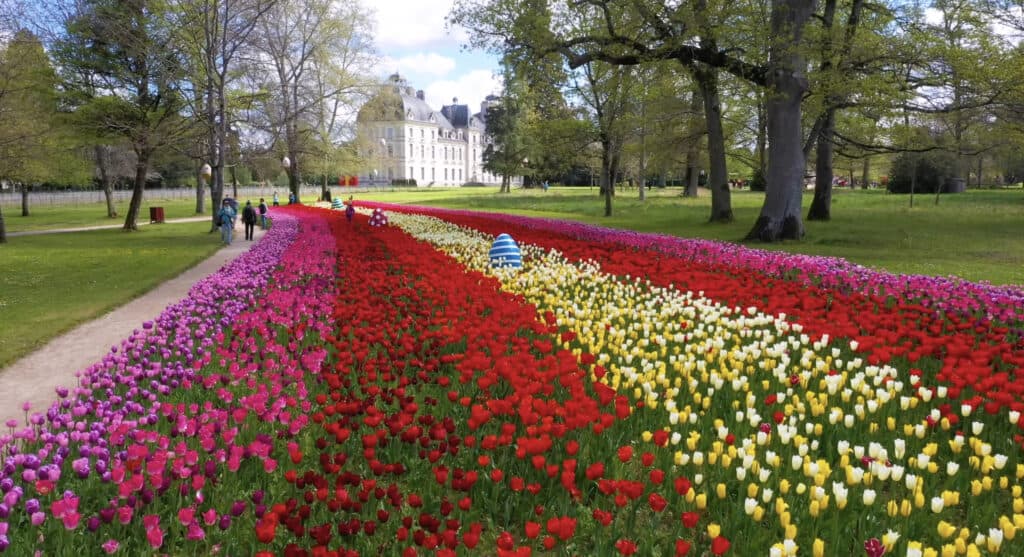
The display features two 350-meter-long, 12-meter-wide floral ribbons. Attracting 350,000 visitors yearly, many return for the tulips, per régisseur Renaud Boyer. Initiated in 2014 by owner marquise de Vibraye, tulips have historical roots in 17th-century château decorations. Tulips adorn interior elements like paneling, ceilings, and beams, linking to the château’s construction era.
Château de Cheverny
The Château de Cheverny in France’s Loire Valley traces its origins to 1315 under Henry Le Mareschau, passed to Jean Hurault in the late 14th century, and elevated when Jaques Hurault became Seigneur de Cheverny under Francis I. After forfeiture to King Henri II, who gifted it to Diane de Poitiers (who sold it), Philippe Hurault rebuilt it between 1624 and 1630 to designs by Jacques Bougier, with interiors completed by 1650. Ownership shifted through the Hurault family, with major renovations in 1768; during the French Revolution, it was sold in 1802 but repurchased in 1824 under the Bourbon Restoration. Opened to the public in 1914, it remains family-owned by the Marquis de Vibraye, serving as a major tourist site renowned for its interiors, furniture, tapestries, and objets d’art, and was visited by Queen Elizabeth The Queen Mother in 1963.
Source: france3