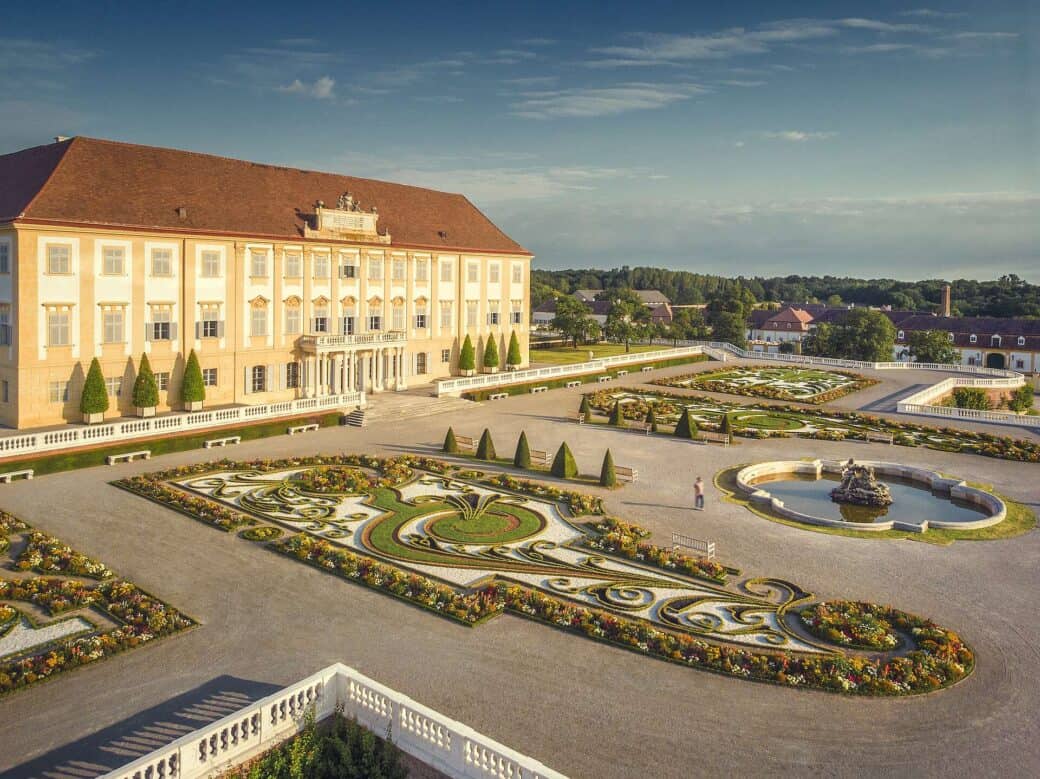
AUSTRIA — The baroque palace of Schloss Hof is unveiling a major new exhibition for 2026 titled “Verspielte Symmetrie – Der Barockgarten als Kunstwerk” (Playful Symmetry – The Baroque Garden as a Work of Art). Running from 7 March to 2 November 2026, the exposition invites you to discover how baroque garden design transformed outdoor space into an artistic expression of power, aesthetics and social identity.
Set within the magnificent 18th‑century gardens of the imperial estate in northeastern Austria, the exhibition highlights key elements that made baroque gardens so distinctive — from geometric layouts, sculptural groups and water features to ornamental planting and exotic specimens. Rather than presenting garden architecture as a simple landscape feature, the show reveals how these designed spaces were crafted as Gesamtkunstwerke, or total works of art, combining botany, architecture, engineering and aesthetic theory.
Baroque gardens as art and spectacle
The exhibition places special emphasis on the defining principles of baroque garden design. Visitors will see how formal symmetry, sculpted trees and floral arrangements were used to create visually spectacular compositions. Movement and reflection played key roles, with fountains, cascades and mirror‑like basins animating geometric lines and architectural axes.
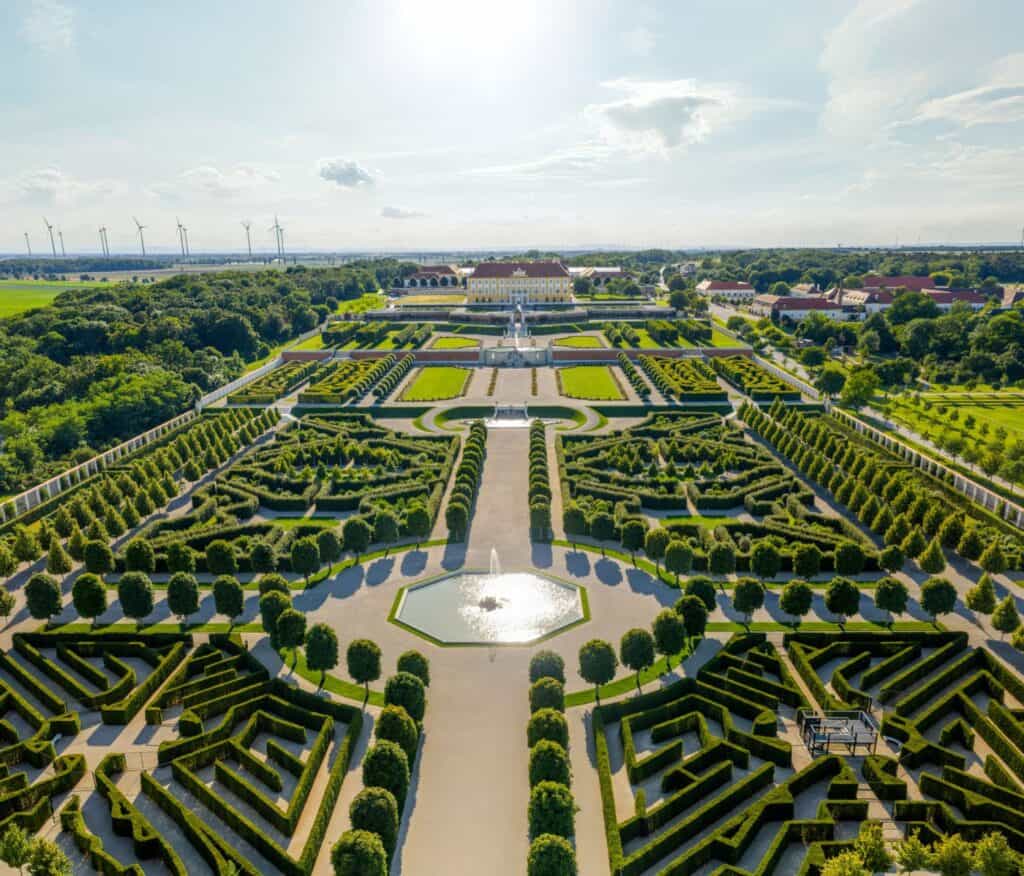
Beyond aesthetics, Schloss Hof’s baroque garden served multiple functions: a stage for courtly entertainments, a demonstration of technological innovation, and a symbol of aristocratic and imperial status. Historic systems of reservoirs, pumps and hydraulics that powered water features are featured in the exhibition alongside representations of ornamental design and planting schemes.
A garden of power and pleasure
Baroque gardens were more than places for leisure; they expressed ideas about order, culture and social hierarchy. At Schloss Hof, these ideas took form across terraces, stairways, pavilions, belvederes and sculpted vistas. The exhibition explores how gardens influenced — and were influenced by — baroque painting, sculpture, literature, music and court ritual, revealing them as central sites of artistic and intellectual exchange in their time.
Exotic plants such as citrus trees and even pineapple specimens, once rare and cherished in northern gardens, underscore the lavish resources devoted to forst and garden culture in the baroque era. At the same time, utilitarian spaces such as kitchen gardens and herb plots followed the same principles of symmetry and order as the ornamental parterres.
A total garden experience
The exhibition is spread throughout Schloss Hof’s grounds, offering a garden‑wide interpretation of baroque design logic. Entrances, terraces and garden rooms provide varied perspectives on how symmetry structures both visual sequences and visitor movement.
Alongside the exhibition, guided tours are available in several languages throughout the season.
Visitors can also explore the rest of Schloss Hof’s attractions, including the lavish Baroque palace rooms, terraced gardens originally commissioned by Prince Eugene of Savoy, and the lively historic Gutshof (farmstead) with its thematically planted gardens and animal enclosures.
Practical information for visitors
The Verspielte Symmetrie exhibition is included with regular Schloss Hof admission and runs daily throughout the spring to autumn season. The palace and gardens are open from 10:00 to 18:00, making it a rewarding destination for day trips from Vienna or Bratislava.
More info: www.schlosshof.at/en/