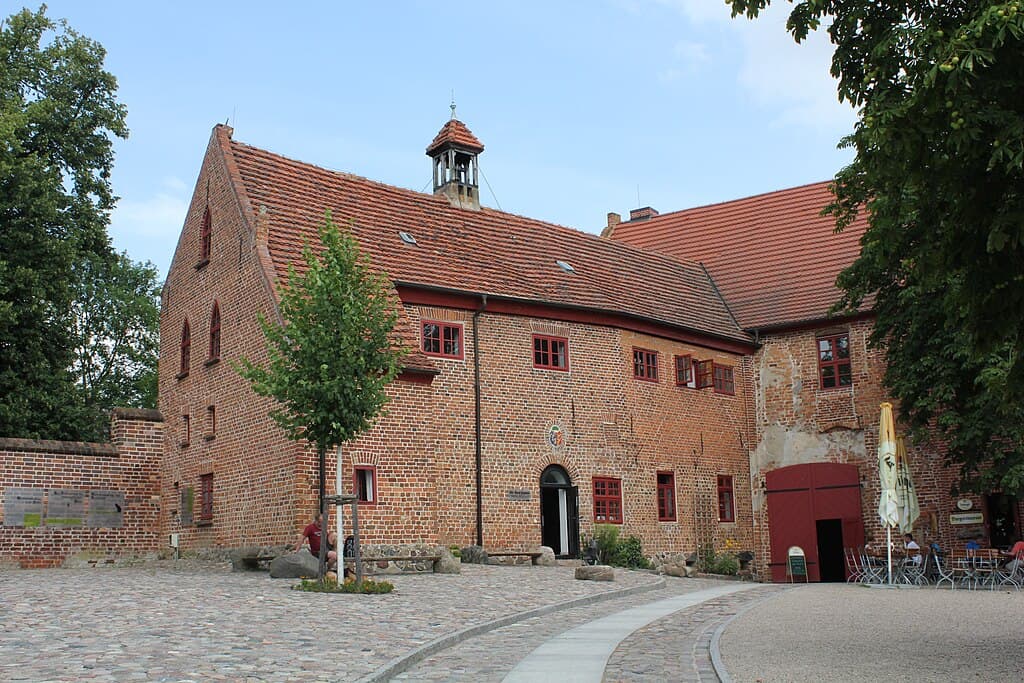
PENZLIN, GERMANY — An unassuming medieval fortress in the heart of Mecklenburg-Vorpommern hides one of the most chilling chapters of early modern European history, according to German news outlet Bild. Penzlin Castle, now a cultural heritage site and museum, was once a centre of fear, torture and the deadly witch hunts that ravaged this region centuries ago.
Situated between the towns of Neubrandenburg and Waren, Penzlin seems an idyllic small town of just under 3,000 inhabitants. But beneath its scenic exterior lies a grim reminder of the brutality of witch trials that swept across Europe. At Penzlin Castle, a subterranean torture cell known as the Hexenkeller was constructed around 1560, seven metres below ground. In these dank chambers, accused “witches” were subjected to interrogation and torment that often ended in death.
Historians estimate that tens of thousands of people were persecuted as witches across what is now Germany during the witchcraft craze, with roughly 4,000 legal proceedings taking place in Mecklenburg-Vorpommern alone between 1336 and 1777 — approximately half of those resulting in executions.
At the core of the region’s witch hunts was a climate of fear driven by famine, disease and social tension. Accusations could be triggered by anything from jealousy to longstanding superstitions. The infamous Malleus Maleficarum (“Hammer of Witches”), a treatise published in 1487, lent supposed judicial legitimacy to torture and execution, legitimising accusations and brutal methods throughout the Reich.
In Penzlin’s underground cells, alleged witches were reportedly chained in stone niches and forced into confessions — often with instruments like spiked chairs and racks nearby. The isolation and cruelty of these dungeons meant that many cries for mercy went unheard.
Following the end of the Thirty Years’ War, the castle began to fall into decay. It was later partially renovated, inhabited through later centuries, and ultimately transformed in the 1990s into the Museum of Everyday Magic and Witch Persecution (Museum für Alltagsmagie und Hexenverfolgungen).
Today, the castle not only displays original artefacts and torture instruments from the era but also serves as a cultural venue hosting weddings, medieval fairs and annual events such as the Walpurgis Night celebration — where visitors can explore the haunted cellar and learn about its history.
According to museum officials, more than 20,000 visitors from across Germany, Europe and overseas come each year to confront this haunting past and reflect on how fear and superstition once fueled injustice.
source: Bild.de