


For centuries, Europe’s nobility has embodied the continuity of tradition, authority, and influence across the continent. Through dynastic ambition and the weight of their titles, noble families have left an indelible imprint on the political and cultural fabric of Europe. How did it become this way and are aristocrats still relevant?
Roots of feudalism
The origins of European nobility are indeed closely linked to the development of feudalism, which was the dominant structure in medieval Europe from roughly the 9th to the 15th century. In this system, all land nominally belonged to the monarch, who retained a portion for the crown and allocated the remainder to trusted nobles and ecclesiastical institutions. Nobles were granted these estates—known as fiefs—conditional upon their oath of allegiance and willingness to provide military service or other support to the monarch. This system established a hierarchy where status was not merely a social distinction but bore economic, legal, and military responsibilities.
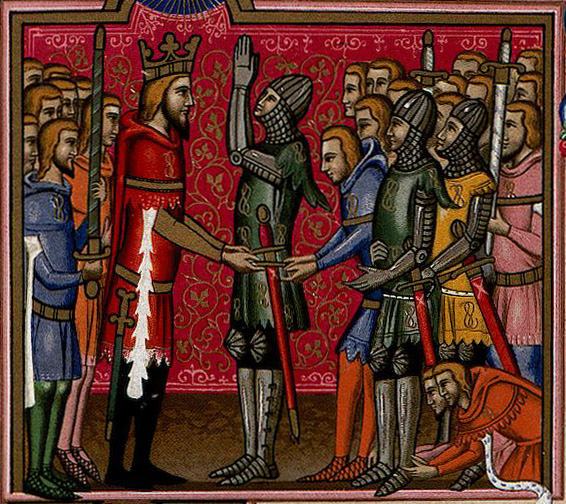
Within the feudal hierarchy, the king or queen held the supreme position at the apex, followed by high-ranking nobles such as dukes, counts, and barons who governed large territories in the monarch’s name. Lesser nobles—knights and landed gentlemen—were further down the ladder, acting as vassals to their immediate lords and organizing local military defense, justice, and administration. The interlocking relationships of lordship and vassalage shaped governance, land tenure, and even the local economies, with serfs and peasants working the land under varying degrees of obligation.
Over time, feudalism’s rigid structures softened as economic and legal reforms, the rise of towns, and the emergence of centralized nation-states eroded the direct power of nobles. Yet, this medieval system was fundamental in creating the enduring ranks, traditions, and titles that distinguish European nobility to this day. Each title carried with it a legacy of privilege and duty, deeply embedded in the social, political and cultural fabric of the continent.
England
In England, the Norman Conquest of 1066 fundamentally reshaped the nobility, replacing the Anglo-Saxon elite with a Norman aristocracy loyal to William the Conqueror. Titles such as duke, earl, and baron became markers of power, tied to land grants and military obligations under the feudal system. The peerage system, formalized by the 13th century, established a clear hierarchy: dukes held the highest rank below the monarch, followed by marquesses, earls, viscounts, and barons. These nobles governed vast estates, administered justice, and provided military support, with their status reinforced through heredity and royal favor. Unlike Scandinavia’s less rigid frälse or Eastern Europe’s autonomous szlachta, English nobles operated within a tightly structured feudal framework, though their influence waned as centralized monarchy and parliamentary power grew, particularly after the Magna Carta (1215). Compared to Spain’s grandees, English nobles had less regional autonomy but were deeply integrated into a national hierarchy, leaving a lasting legacy in titles and traditions that shaped British governance and society.
France
In France, the feudal system similarly gave rise to a powerful aristocracy, with titles like duc (duke), comte (count), vicomte (viscount), and chevalier (knight) reflecting a rigid social and political hierarchy from the 9th century onward. French nobles, particularly during the Ancien Régime (15th–18th centuries), reached the height of their influence, enjoying vast privileges, tax exemptions, and control over land and serfs, often at the expense of an overburdened peasantry. Unlike Italy’s urban, mercantile nobility or England’s more centralized peerage, French nobles wielded significant regional power, with major ducs like those of Burgundy or Brittany acting almost as semi-independent rulers. Their opulent courts and political influence, centered around Versailles under Louis XIV, contrasted with the more localized roles of Scandinavian nobles and the broader autonomy of Eastern European elites. Growing resentment of noble privileges fueled tensions that culminated in the French Revolution (1789), which drastically reduced their power, unlike the gradual decline seen in England or the persistence of noble influence in Eastern Europe and Spain.
Spain
In Spain, the Reconquista (8th–15th centuries), a centuries-long campaign to reclaim Iberian territories from Muslim rule, profoundly shaped the development of the nobility, culminating in the emergence of powerful noble families known as grandees. These elites, granted titles such as duque (duke), marqués (marquis), and conde (count), earned their status through military service, loyalty to the crown, and governance of vast estates during and after the Reconquista. The Spanish monarchy, consolidated under Ferdinand and Isabella by the late 15th century, relied on these nobles to administer newly unified territories, rewarding them with land, privileges, and influence in royal courts. Grandees held significant political and social power, often controlling regional governance and military forces, but their autonomy was gradually curtailed as the monarchy centralized authority, particularly under the Habsburgs (16th–17th centuries). Their titles, tied to both service and heredity, became symbols of prestige, with grandees playing key roles in Spain’s imperial ambitions, distinguishing their nobility from the more fragmented Scandinavian systems and the broader, less centralized noble classes of Eastern Europe.
Italy
In Italy, the nobility evolved within the dynamic and fragmented context of Renaissance city-states (13th–16th centuries), where powerful families like the Medici in Florence, the Sforza in Milan, and the Gonzaga in Mantua rose to prominence. Unlike Spain’s centralized monarchy, Italy’s nobility operated in a competitive landscape of independent city-states, with titles such as duca (duke), principe (prince), and conte (count) varying by region and reflecting local traditions. These aristocrats often gained power through wealth (from trade or banking), political maneuvering, or military prowess, rather than solely through royal grants, as in Spain or Western Europe’s feudal model. Italian nobles were patrons of the arts and culture, shaping the Renaissance, but their authority was marked by intense rivalry and intrigue, contrasting with the more cooperative lord-vassal relationships of Western Europe. Italian nobility was urban, mercantile, and less tied to land-based feudalism, creating a unique aristocratic culture that balanced political dominance with cultural influence in a fragmented political landscape.
Scandinavia
In Scandinavia, the nobility developed within the framework of feudal-like systems that emerged later than in central Europe, roughly from the 12th to 14th centuries, shaped by the region’s unique geography and socio-political structures. Unlike the rigid feudal hierarchies of Western Europe, Scandinavian nobles, often called frälse (freemen), were initially local chieftains, wealthy landowners, or warriors who gained privileges through service to the crown, particularly in military and administrative roles. Kings granted them tax-exempt land and titles, such as jarl or knight, in exchange for loyalty and support, with Denmark and Sweden formalizing these structures earlier than Norway. Over time, as centralized monarchies strengthened, the nobility’s power grew through intermarriage, land accumulation, and roles in royal councils, though their influence varied due to Scandinavia’s decentralized nature and reliance on free peasant communities. By the late Middle Ages, nobles became key players in shaping regional governance, law, and military organization.
The Dutch exception
During the age of feudalism, the Dutch held an exceptional position in Europe. While most countries were ruled by monarchs and bound by feudal hierarchies, the northern provinces of the Low Countries broke away from Spanish rule in the late 16th century and formed the proud Dutch Republic: a federation governed by wealthy merchants and provincial states rather than kings. The Stadtholder held a unique and somewhat paradoxical position. Officially, the Republic had no monarch, but the Stadtholder (often a prince from the House of Orange-Nassau) acted as a chief executive and military leader, overseeing defense and foreign affairs while balancing the authority of the provincial States. This early form of republicanism fostered remarkable economic and cultural growth during the Dutch Golden Age. This is also one of the reasons, you don’t find the Baroque extravaganza of the nobility that you find in Germany or France. After centuries as a republic, the political tides of the Napoleonic era brought change: in 1815, the Congress of Vienna established the Kingdom of the Netherlands, with William I of the House of Orange-Nassau as its first king, combining the country’s republican legacy with a new constitutional monarchy.
Eastern Europe
In Eastern Europe, the nobility was shaped by diverse cultural influences, and varying degrees of centralization from roughly the 10th to 15th centuries. In regions like Poland, Hungary, and Russia, nobility emerged from tribal elites, warriors, and landowning families who gained privileges through service to monarchs or princes, often as military leaders or administrators. Unlike Western Europe’s rigid feudal hierarchy, Eastern European nobility operated in less centralized systems, influenced by Byzantine, Mongol, and local traditions. For example, in Poland and Hungary, nobles (szlachta and nemes, respectively) secured significant autonomy and tax exemptions, forming a broad noble class that included both magnates and lesser gentry, with rights codified in documents like Hungary’s Golden Bull (1222).
In Russia, the boyars, initially advisors to princes, held vast estates but faced growing centralization under Muscovite rulers by the 15th century. Land grants were tied to service, but serfdom became harsher in Eastern Europe, tying peasants more tightly to noble estates than in Scandinavia’s freer peasant communities. Compared to Western Europe’s structured feudalism with clear lord-vassal relationships, Eastern European nobility enjoyed greater independence from monarchs, often dominating local governance and assemblies, like Poland’s Sejm. However, like Scandinavia, Eastern Europe’s nobility developed later than Western Europe’s, with less rigid hierarchies but stronger regional variation due to external influences and slower state centralization. Both regions’ nobles relied on land and royal favor, but Eastern European nobles wielded more political power in decentralized systems.
Adapting to change
As Europe moves further into the 21st century, the future of nobility remains uncertain. Rapid societal changes, economic challenges, and shifting attitudes towards privilege and hierarchy pose significant challenges to the traditional aristocratic model. Noble families have shown remarkable resilience throughout history, adapting to changing circumstances and evolving social norms. While the days of feudal lords and vassals may be long gone, the spirit of nobility, characterized by duty, honor, and service, continues to resonate with many. But also: the black pages of history, marked by self-enrichment, corruption, and exploitation of the so called ‘upper class’ cannot be ignored.
Still popular among the people
Are Europe’s royal families still relevant to modern society? Well, their popularity varies from country to country, but many still enjoy significant public affection. Their appeal often lies in a blend of continuity, symbolism, and human interest. For many, they represent national identity and history, yet also serve as modern public figures who engage with social causes and cultural life. Royal events, like weddings and jubilees attract large crowds and high television ratings and widespread media attention. In an age of rapid change, many find comfort in the monarchy’s sense of stability and tradition, even as royal families adapt to remain relevant in contemporary society.
Royal relations
All the reigning families are connected through family relations. This video, albeit with small mistakes (read the comments), illustrates how the monarchs of today are related.
Here’s a list of the still existing royal families in Europe, meaning countries where monarchy remains the constitutional or official form of government and the royal family continues to play a ceremonial or political role.
Reigning Royal Families
These monarchies are part of the state system — the monarch is head of state.
- Belgium – The Belgian Royal Family (House of Saxe-Coburg and Gotha)
- Current monarch: King Philippe
- Denmark – The Danish Royal Family (House of Glücksburg)
- Current monarch: King Frederik X (since 2024)
- Liechtenstein – The Princely Family of Liechtenstein (House of Liechtenstein)
- Current monarch: Prince Hans-Adam II (regent: Hereditary Prince Alois)
- Luxembourg – The Grand Ducal Family of Luxembourg (House of Nassau-Weilburg)
- Current monarch: Grand Duke Henri
- Monaco – The Princely Family of Monaco (House of Grimaldi)
- Current monarch: Prince Albert II
- Netherlands – The Dutch Royal Family (House of Orange-Nassau)
- Current monarch: King Willem-Alexander
- Norway – The Norwegian Royal Family (House of Glücksburg)
- Current monarch: King Harald V
- Spain – The Spanish Royal Family (House of Bourbon)
- Current monarch: King Felipe VI
- Sweden – The Swedish Royal Family (House of Bernadotte)
- Current monarch: King Carl XVI Gustaf
- United Kingdom (and other Commonwealth realms) – The British Royal Family (House of Windsor)
Current monarch: King Charles III
Non-reigning but Existing Royal Houses
These families have lost their thrones but still exist as noble dynasties with historical or cultural significance.
- Austria – House of Habsburg-Lorraine
- France – Competing royal lines (House of Bourbon-Orléans and House of Bonaparte)
- Germany – Numerous former ruling houses (Hohenzollern, Wittelsbach, Hannover)
- Greece – Former Greek Royal Family (House of Glücksburg)
- Italy – House of Savoy
- Portugal – House of Braganza
- Romania – House of Romania (formerly Hohenzollern-Sigmaringen)
- Bulgaria – House of Saxe-Coburg and Gotha
- Serbia – House of Karađorđević
- Montenegro – House of Petrović-Njegoš
- Albania – House of Zogu


