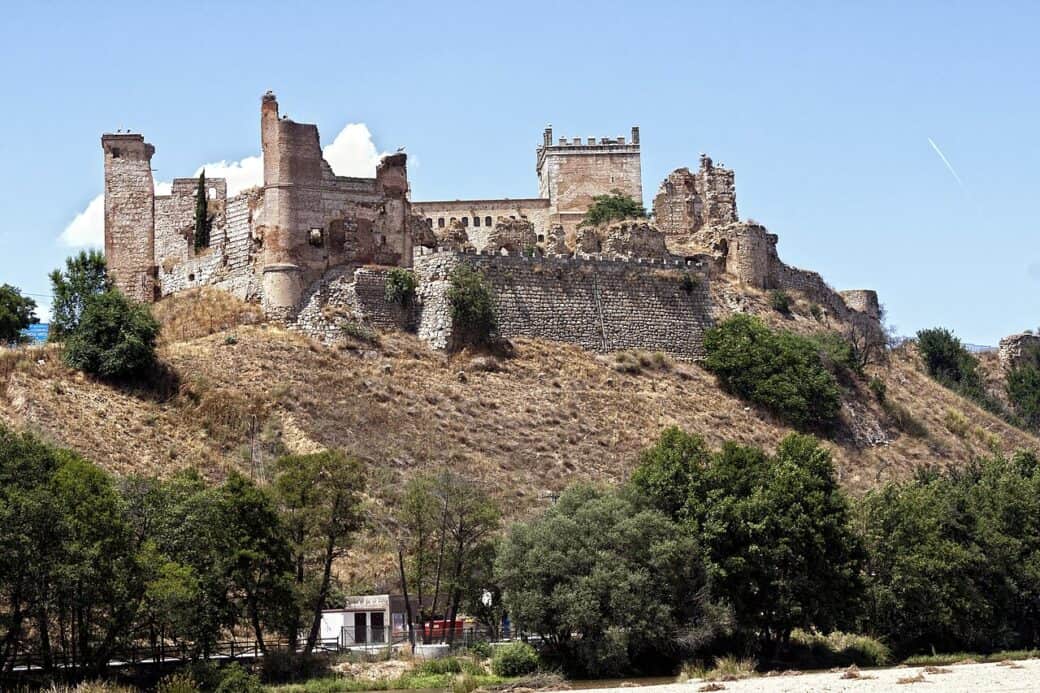
Escalona, Spain — A dramatic collapse of a tower at the medieval Castillo de Escalona, near Madrid, has spotlighted the vulnerability of Europe’s aging historic monuments. On the morning of March 14, 2026, one of the castle’s towers gave way just before the site was due to open to the public.
Local authorities reported that the incident occurred around 10:30–10:40 a.m., when a section of an albarrana tower (a freestanding defensive structure) suddenly collapsed, sending stones and debris cascading into the surrounding area. Fortunately, no injuries occurred, as visitor access had not yet begun, though several parked vehicles sustained damage.
Moment captured on video
Tourists waiting nearby filmed the collapse, capturing masonry crumbling away before the tower fully gave in, producing a thick cloud of dust. The footage spread rapidly online, highlighting both the event’s startling drama and the precarious state of many centuries-old structures.
Emergency services promptly secured the site, and all visits remain suspended pending expert structural assessments of the remaining towers and walls.
A recently reopened landmark
The timing is especially poignant: the fortress, in Toledo province, was acquired by the municipality in 2024 and reopened to visitors in April 2025, quickly establishing itself as a popular regional attraction. Dating primarily to the 15th century (with origins tracing back over 700 years to earlier Muslim-era foundations), the castle is a protected cultural landmark. Its imposing walls and towers have long overlooked the town of Escalona and the Alberche River valley, symbolizing noble power and strategic control.
Likely cause: heavy rainfall
Although a comprehensive technical investigation continues, officials and initial inspections point to prolonged heavy rainfall as the primary factor. Water infiltration is believed to have caused erosion, added excessive internal weight, and weakened the structure—particularly the 15th-century additions to the older tower core. Restoration discussions were already underway before the collapse, underscoring the persistent difficulties of preserving large medieval fortifications.
A wider European challenge
For heritage experts, conservationists, and travelers, the Escalona incident illustrates a growing continent-wide concern: historic monuments are increasingly stressed by aging materials, extreme weather linked to climate change, and chronic underfunding.
Castles and fortifications, exposed to the elements and constructed with traditional techniques, demand constant monitoring, maintenance, and investment. While sudden failures remain uncommon, they serve as stark reminders of the need for proactive conservation and reinforcement.
Implications for visitors and the future
The Spanish castle is currently closed as safety evaluations proceed. Though disappointing for those planning to visit this lesser-known gem, public safety and long-term preservation take precedence. In the longer term, the event may catalyze accelerated restoration work and attract fresh attention – and hopefully funding – to the site’s conservation.
For castle enthusiasts, it is a sobering reminder: these landmarks are not immutable relics but fragile, living structures that require sustained care to endure.