Spring is when Europe’s castles and palaces are at their most elegant. Gardens return to life, fountains flow again, and historic interiors host major exhibitions and exciting cultural events. Between March and May, you can enjoy fewer crowds than summer, ideal weather, and exclusive seasonal programming. Here are 20 exceptional castles and palaces, each selected for its historical importance, visual beauty.
1. Palace of Versailles — France

The always spectacular Palace of Versailles blossoms into spring with a rich cultural calendar. Beginning May 5–September 27, 2026, Versailles presents the major exhibition “Gardens of Enlightenment (1750–1800)”, exploring the revolutionary garden aesthetics that transformed European landscape design with nearly 150 works, from paintings and architectural plans to costumes — set alongside the historic gardens for enhanced context.
Spring also brings the world-renowned Musical Fountains Shows and Musical Gardens Shows, where over 600 fountains flow in harmony with Baroque music — a dreamlike experience during sunny afternoons. In addition to visual arts, the estate’s 2025–26 opera, ballet, and concert season features performances in the Royal Opera and Chapel, offering refined cultural evenings.
Website:
en.chateauversailles.fr
2. Schönbrunn Palace — Vienna, Austria

The former Habsburg summer residence, Schönbrunn Palace, offers a blend of imperial history and cultural life as spring arrives. Its ornately furnished state rooms are open year-round, and the palace’s seasonal classical concerts in the historic Orangery feature Mozart and Strauss compositions — perfect after exploring the opulent interiors.
In spring, the sprawling Schönbrunn Gardens burst into flower with formal parterres and hilltop vistas over Vienna. While the famous Vienna Philharmonic Summer Night Concert takes place in June 2026, its presence resonates through the city with previews, masterclasses, and chamber performances.
The palace also hosts special guided tours focusing on Maria Theresa’s reign and the lives of the imperial family, ideal for spring travellers seeking deep historical context.
Website:
www.schoenbrunn.at
3. Sanssouci — Potsdam, Germany

King Frederick the Great’s beloved Sanssouci Palace in Potsdam becomes especially inviting in spring when terraced vineyards and Rococo gardens are at their freshest. The Sanssouci Park — a UNESCO World Heritage ensemble — is perfect for leisurely walks with fountains, pavilions, and classical sculptures emerging from winter rest.
Late spring often brings the Potsdam Palace Night (Schlössernacht) with atmospheric illuminations, music stages, and evening tours, transforming the palaces after dark (dates to be confirmed for 2026).
Inside, the palace’s intimate chambers and art-rich rooms narrate Prussian royal tastes, while garden tours showcase hidden follies and views over the Havel River.
Website:
potsdam-sanssouci.com
4. Frederiksborg Castle — Hillerød, Denmark

Dominating a picturesque lake, Frederiksborg Castle houses Denmark’s Museum of National History, tracing monarchic legacies through portraits, tapestries, and artifacts. Spring light fills its grand halls as visitors explore exhibitions that rotate throughout the season (with special talks and curatorial tours often on weekend schedules).
The Baroque Gardens surrounding the castle — among the finest in northern Europe — come alive with formal beds, fountains, and reflective canals from April onwards.
Guided storytelling tours introduce guests to Denmark’s Golden Age, while seasonal family programs and art workshops add cultural depth to spring visits.
Website:
frederiksborg.dk
5. Hampton Court Palace — England

Hampton Court Palace, once home to Henry VIII, blends Tudor authenticity with vibrant spring culture. Its historic kitchens, maze, and Great Hall remain perennial favourites, while the gardens offer early blooms with magnolias, tulips, and herbaceous borders.
The Hampton Court Palace Festival runs into June 20, 2026, with select spring concert dates turning the Tudor courtyard into an elegant open-air music venue.
Daily guided tours detail the palace’s royal intrigues and architectural evolution from Gothic fortress to Baroque palace.
Website:
www.hrp.org.uk/hampton-court-palace
6. Blenheim Palace — England

This monumental English estate, birthplace of Sir Winston Churchill, offers more than grand interiors. In late spring May–June 2026, Blenheim often stages exhibitions on aristocratic art and British photographic history, while its 2,000-acre Capability Brown parkland showcases rolling lawns and early garden blooms. The Blenheim Palace Festival kicks off in early summer but spring visitors still enjoy themed trail walks, historic costume displays, and garden tours introducing seasonal plantings and sculpture installations.
Website:
www.blenheimpalace.com
7. Royal Palace of Caserta — Italy

The grand Royal Palace of Caserta near Naples combines opulent Baroque interiors with some of Europe’s most extensive formal gardens. Early spring 2026 sees the Regine: Weavings of Culture and Diplomacy Between Naples and Europe exhibition through April 20, 2026, celebrating queens and noble patronage with over 200 works.
Also continuing into early March (timing varies) is the acclaimed Massimo Listri photographic exhibition Perspectives at the Royal Palace of Caserta, which offers meditative architectural visions of the palace spaces.
Website:
reggiadicaserta.cultura.gov.it
8. Château de Chambord — Loire Valley, France
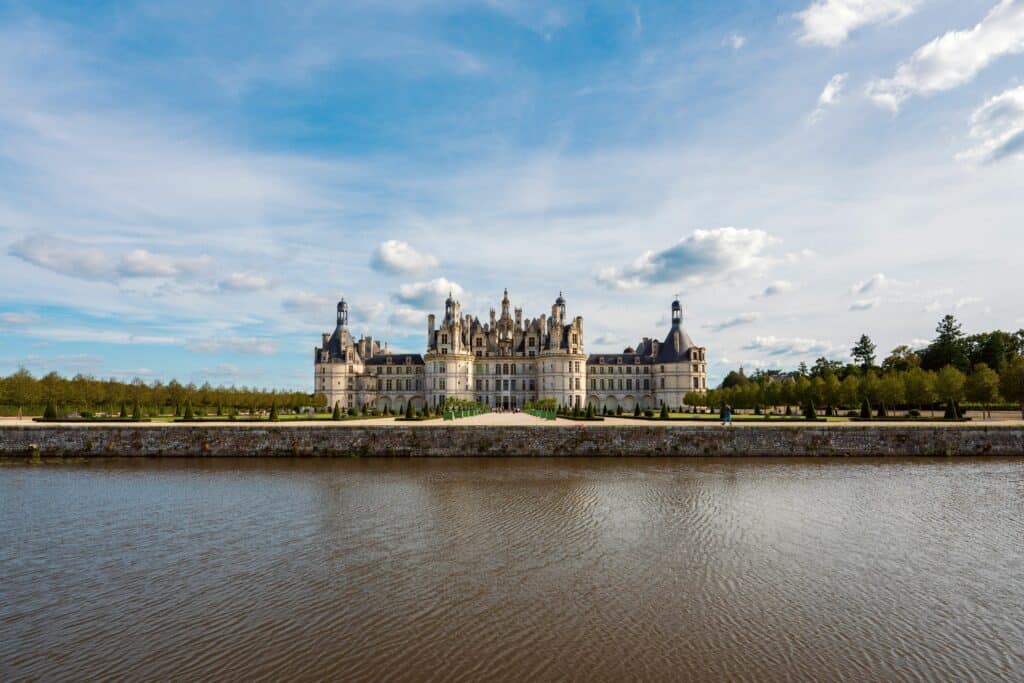
A Renaissance masterpiece with over 400 rooms and a double-helix staircase reportedly inspired by the immortal Leonardo da Vinci, Château de Chambord is one of Europe’s most iconic castles. Spring 2026 welcomes visitors with longer opening hours beginning March 29, inviting exploration of its star-shaped layout and vast forest park. Surrounding woodlands and formal gardens bloom beautifully in May, ideal for cycling and walking routes.
Chambord offers both architectural wonder and cultural programming in a natural setting.
Website:
https://www.chambord.org
9. Château de Chenonceau — Loire Valley, France

Known as the “Ladies’ Castle” for its succession of remarkable women owners, Chenonceau bridges the River Cher with graceful arches and lush hanging gardens. While specific 2026 events are still confirmed closer to spring, spring’s mild weather brings spectacular garden displays and early seasonal plantings, complemented by themed guided tours that explore the castle’s female cultural impact.
Spring visitors often coincide with wine tastings, historic costume displays, and outdoor musical performances on the river terrace
Website:
www.chenonceau.com
10. Alcázar of Seville — Spain

The stunning Alcázar of Seville, an enduring example of Mudéjar architecture, comes to life in spring with orange blossoms (azahar) perfuming its courtyards and gardens. Seasonal Easter (Semana Santa) processions through Seville’s streets and plazas — typically in late March or April — bring a deeply resonant cultural experience, often tied to performances and choral concerts near the Alcázar precincts. Concerts and patio music evenings also occur on select spring evenings, combining flamenco, classical guitar, and early music in dramatic historic settings.
Website:
alcazarsevilla.org
11. Neuschwanstein Castle — Bavaria, Germany

Neuschwanstein Castle is Europe’s ultimate fairytale icon. Spring 2026 marks the return of full access from mid-March, when snow recedes and green meadows frame the castle’s white limestone towers. Guided interior tours explore King Ludwig II’s romantic vision, inspired by medieval legends and Wagnerian opera, with richly painted halls and theatrical symbolism.
Spring is also the best season for scenic walks to Marienbrücke, offering postcard-perfect views over the Pöllat Gorge. On selected evenings in April and May, extended opening hours and soft illumination create a particularly atmospheric experience for photographers and culture-focused travelers.
Website:
www.neuschwanstein.de
12. Windsor Castle — Berkshire, England

Windsor Castle, the world’s oldest continuously inhabited royal residence, combines living monarchy with monumental architecture. Spring 2026 brings seasonal floral displays in the Quadrangle and ceremonial interiors, enhancing the grandeur of the State Apartments and St George’s Hall. Weekend chamber music recitals are traditionally held in April and May, adding an elegant cultural layer to daytime visits. Guided tours of St George’s Chapel — resting place of kings and queens — provide insight into centuries of royal tradition. Spring’s mild weather also makes walks along the Long Walk and castle terraces especially appealing.
Website:
www.rct.uk/visit/windsor-castle
13. Prague Castle — Prague, Czech Republic

Stretching across a hill above the city, Prague Castle is the largest castle complex in Europe and a living chronicle of Central European history. In spring 2026, the castle gardens reopen fully from late March, revealing panoramic views over the Vltava River and Prague’s historic rooftops.
Seasonal exhibitions from March to May focus on royal interiors, medieval art, and Bohemian craftsmanship, often accompanied by weekend classical music performances in palace halls. The Golden Lane, Old Royal Palace, and St Vitus Cathedral are particularly atmospheric in spring light, making this an ideal season for unhurried exploration.
Website:
https://www.hrad.cz/en/prague-castle-for-visitors
14. Hofburg Palace — Vienna, Austria

The former winter residence of the Habsburg emperors, Hofburg Palace remains a center of imperial culture. Spring 2026 features temporary exhibitions exploring court life, ceremonial fashion, and the legacy of Empress Elisabeth (“Sisi”). Tip: You can attend performances and morning exercises at the nearby Spanish Riding School, a lovely sight to see. Guided palace tours reveal imperial apartments, audience chambers, and treasury collections, offering a refined understanding of Habsburg power and pageantry.
Website:
https://www.hofburg.com/
15. Belvedere Palace — Vienna, Austria

Also in Vienna, the beautiful Baroque Belvedere Palace. It is celebrated both for its architecture and its world-class art collections, including Gustav Klimt’s The Kiss. Spring 2026 brings major temporary exhibitions focusing on Viennese modernism and European painting. The palace gardens reach peak beauty in April and May, with lovely tulip displays and formal terraces. A visit in spring allows you to combine fine art, architecture, and garden design in one harmonious setting. A must see when you are in Vienna.
Website:
www.belvedere.at
16. Wallenstein Palace — Prague, Czech Republic

One of Prague’s most elegant Baroque complexes. This vast palace, the first monumental early Baroque secular building in Prague, was built between 1624 and 1630 for one of the most powerful and wealthiest Czech noblemen of the post-White Mountain period, Albrecht Wallenstein (1583—1634). Today it is the seat of the Czech Senate. The adjacent Waldstein Gardens are open to the public during the summer. Temporary exhibitions in the palace halls explore Central European art, politics, and Baroque patronage. Spring’s reopening of the gardens transforms Wallenstein/Waldstein into a serene cultural retreat just steps from Prague’s historic center.
Website:
prague.eu/en/objevujte/wallenstein-palace-valdstejnsky-palac/
17. Het Loo Palace — Apeldoorn, The Netherlands

Originally this palace built as a summer residence for King William III and Queen Mary II. Het Loo Palace is definitely one of northern Europe’s finest Baroque palaces. Moreover, it is perfectly integrated with its restored formal gardens. Spring 2026 is an exceptional time to visit The Netherlands. During this period, the recently restored interiors and gardens are fully animated with seasonal displays and guided programs.
From March through May, the gardens bloom, with their symmetrical parterres, fountains, and clipped hedges. Meanwhile, indoor exhibitions focus on the Dutch House of Orange and royal life from the 17th to 20th centuries. Additionally, spring often features garden-focused tours, lectures, and family programs.
Website:
https://paleishetloo.nl/en
18. Topkapi Palace — Istanbul, Turkey

Overlooking the Bosphorus, Topkapi Palace was the administrative and ceremonial heart of the Ottoman Empire for centuries. Spring 2026 coincides with Istanbul’s tulip season, when palace gardens bloom in vivid color throughout April. Temporary exhibitions focus on imperial garments, calligraphy, and court rituals. Guided tours of the Harem offer insight into palace life behind the scenes. Mild spring weather allows visitors to fully enjoy the outdoor courtyards and panoramic terraces overlooking Europe and Asia.
Website:
https://muze.gen.tr/muze-detay/topkapi
19. Pena Palace — Sintra, Portugal

If you want to know what paradise must be like, Sintra gives you a hint. Rising above the forests, Pena Palace is one of Europe’s most romantic 19th-century creations. Spring 2026 highlights include guided garden tours showcasing exotic plants collected from across the former Portuguese empire, at their most vibrant from March to May.
The palace’s colorful interiors and terraces are often explored through early-morning or late-afternoon visits, when mist and soft light create a dreamlike atmosphere. Spring cultural programming in Sintra frequently includes concerts and artistic events linked to the palace grounds. A true paradise, if you ask us.
Website:
www.parquesdesintra.pt
20. Edinburgh Castle — Edinburgh, Scotland

Crowning a rock above the city, Edinburgh Castle is definitely one of Scotland’s most iconic historic sites. Spring 2026 brings seasonal exhibitions focused on royal history, military heritage, and medieval craftsmanship, alongside guided tours of the Crown Jewels and royal apartments. From April onward, you may encounter early previews and rehearsals connected to Scotland’s ceremonial and military traditions. And with clearer skies and blooming city gardens below, spring offers excellent visibility and a calmer atmosphere before peak summer crowds arrive.