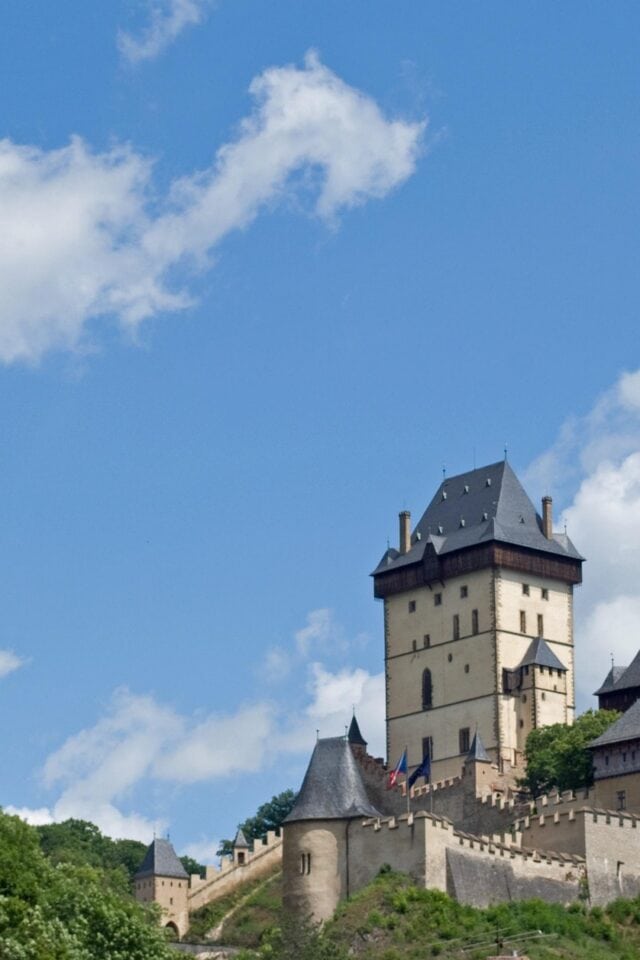
Versailles is extraordinary. But it is also extremely crowded. The good news is that the Île-de-France and its neighbouring departments contain dozens of historic châteaux that see a fraction of the crowds, and sometimes tell stories Versailles cannot. Within 90 minutes of Paris, these five reward the detour.
Château de Vaux-le-Vicomte
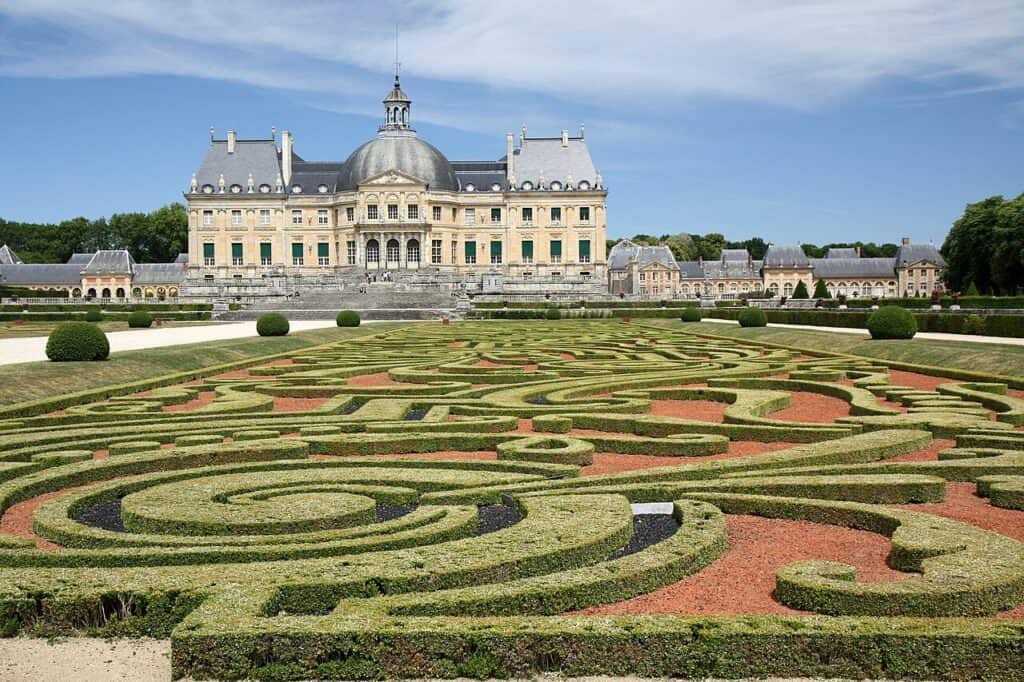
The story of Vaux-le-Vicomte begins with Nicolas Fouquet, Superintendent of Finances to the Grand King Louis XIV. He assembled three of the greatest talents of the age: architect Louis Le Vau, decorator Charles Le Brun, and landscape gardener André Le Nôtre, to build the most magnificent private estate in France. The result, completed in 1661, was so breathtaking that Louis XIV had Fouquet arrested and seized the castle, then commissioned its architects to build a bigger, better version for himself at Versailles.
Since 1875, five generations of the de noble Vogüé family have preserved and restored the estate, which has been open to the public since 1968. On Saturday evenings from May to October, the château and gardens burn with over 2,000 candles. Few experiences in the Paris region come close.
Located 55km southeast of Paris. Open from mid-March to early November. Admission from €17. Train from Gare de l’Est to Verneuil l’Étang, then shuttle to the château.
Official website: vaux-le-vicomte.com
Château de Courson
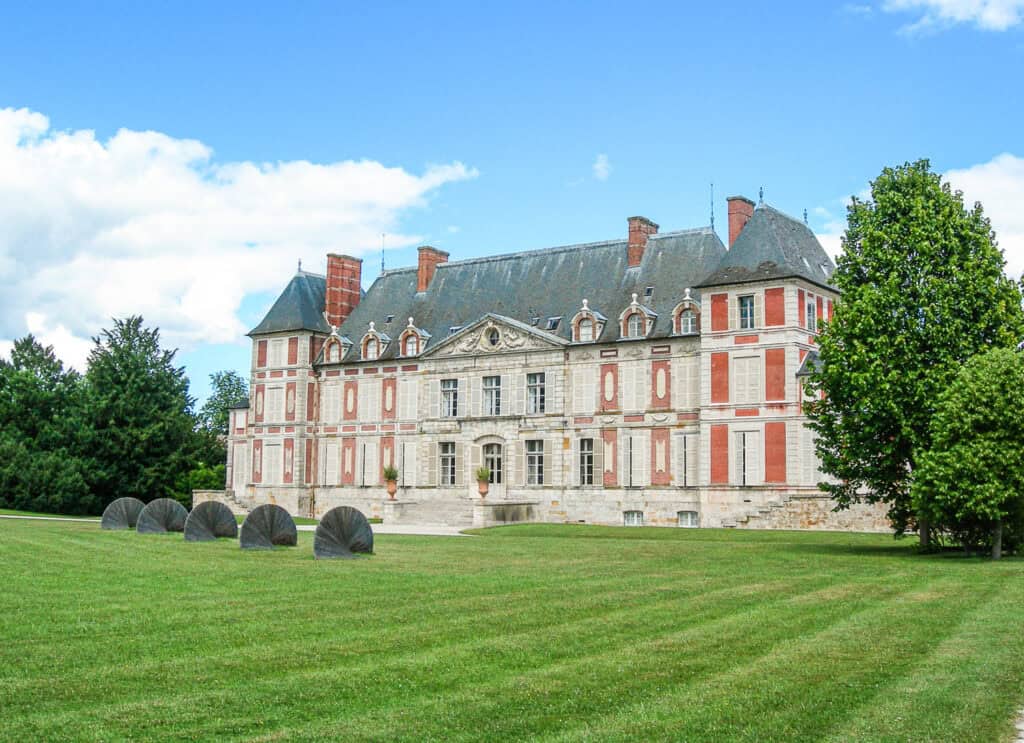
Thirty-five kilometres southwest of Paris, the Domaine de Courson is the kind of place that rewards slow visitors. Built in 1676 for the Lamoignon family, the château has remained in the family of de Nervaux-Loys since the 18th century, its historic park laid out in formal style by a pupil of Le Nôtre. Then in the 19th century, Berthault, gardener to Empresses Joséphine and Marie-Louise,, transformed the landscape. The Bühler brothers followed, bringing the sensibility they applied to the great public parks of the Second Empire.
The result is a 35-hectare romantic park that changes character with the seasons. Camellias and magnolias open in spring, hydrangeas and roses follow in summer, and in autumn the beeches, oaks and maples turn deep red and gold. The Ministry of Culture renewed both its Jardin Remarquable label and botanical park designation in 2024.
Open from mid-March to mid-November. The park is open Monday to Saturday from 2pm to 5pm and Sundays from 10am to 6pm. Château interior visits on Sundays and public holidays only.
Official website: domaine-de-courson.fr
Château d’Écouen and Musée National de la Renaissance
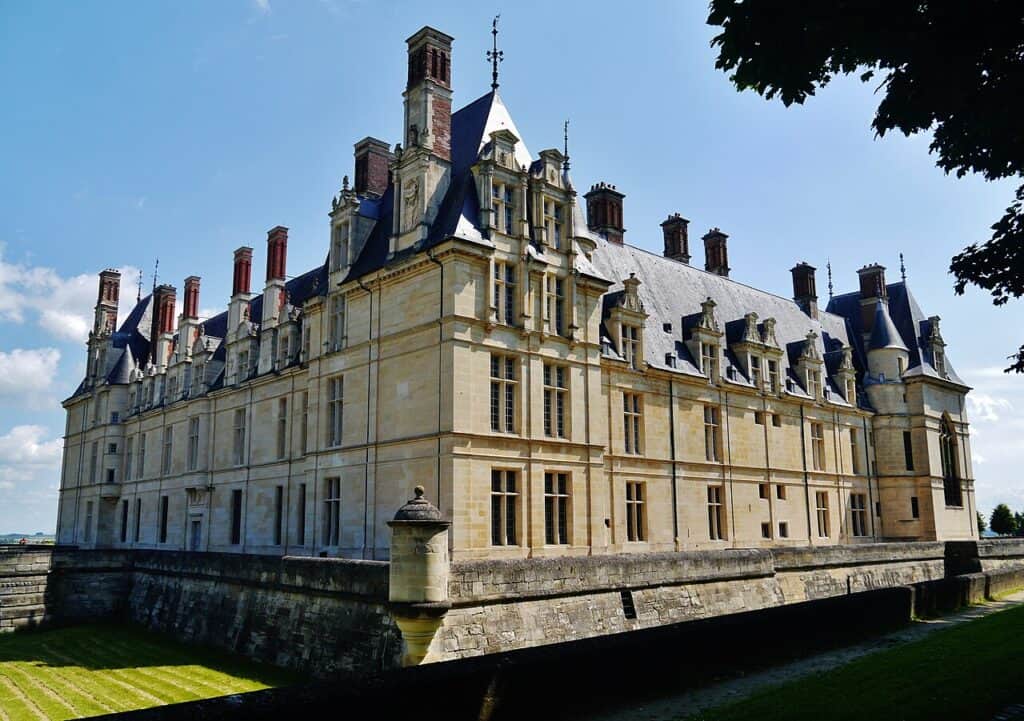
Most visitors to Paris may never have heard of Écouen, which is a genuine loss. Built between 1539 and 1555 for Anne de Montmorency, Constable of France who served under five French kings (Louis XII, François I, Henri II, François II and Charles IX). It is a major example of French Renaissance architecture, set on a hill 20 kilometres north of Paris, overlooking the plain towards the forest of Chantilly. Since 1977 it has housed the Musée National de la Renaissance — the only museum in France dedicated entirely to this period.
The collection spans ceramics, painted enamels, tapestries, glassware, furniture and ivory. The rooms still hold their original 16th-century decor, including an exceptional series of fireplaces in the style of the Fontainebleau School. Admission runs from €5 to €7. Under-26s enter free, as do all visitors on the first Sunday of each month. The Paris Museum Pass is accepted.
Admission is €5 to €7, with free entry for under-26s and on the first Sunday of each month. The Paris Museum Pass is accepted. Train from Gare du Nord (line H) to Écouen-Ézanville, then bus 269 or a 20-minute walk through the forest.
Official website: musee-renaissance.fr
Château de Pierrefonds
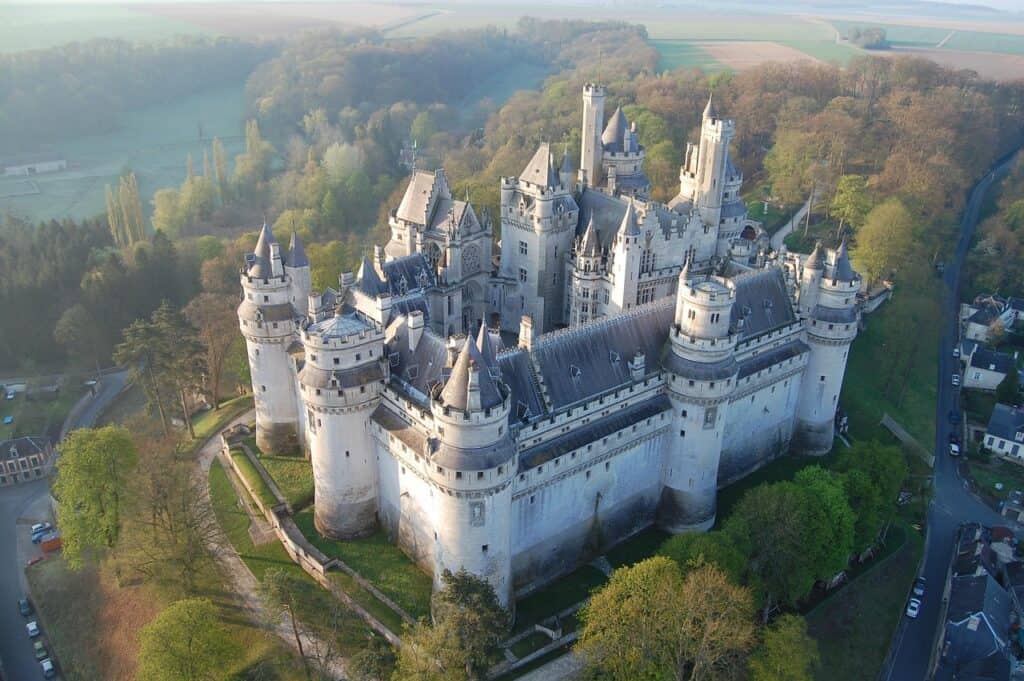
The Château de Pierrefonds, 85 kilometres northeast of Paris near the Forest of Compiègne, began as a 14th-century fortress for Louis, Duke of Orléans. It was besieged and partially demolished in the 17th century, left as a romantic ruin for two centuries. During the French Revolution it was sold for 8,100 francs. Napoleon bought it back in 1813 for 2,700 francs. It was Napoleon III who commissioned its full restoration, entrusting the task to Eugène Viollet-le-Duc, the architect who also rebuilt the medieval walls of Carcassonne and restored Notre-Dame de Paris.
The castle is a 19th-century vision of what a medieval fortress should look like: eight towers, a fortified gatehouse, elaborately carved interiors. It is theatrical and frankly magnificent.
Open every day from 9:30am to 6pm. Booking online in advance is strongly recommended, as visitor numbers are capped.
Official website: chateau-pierrefonds.fr
Château de Fontainebleau
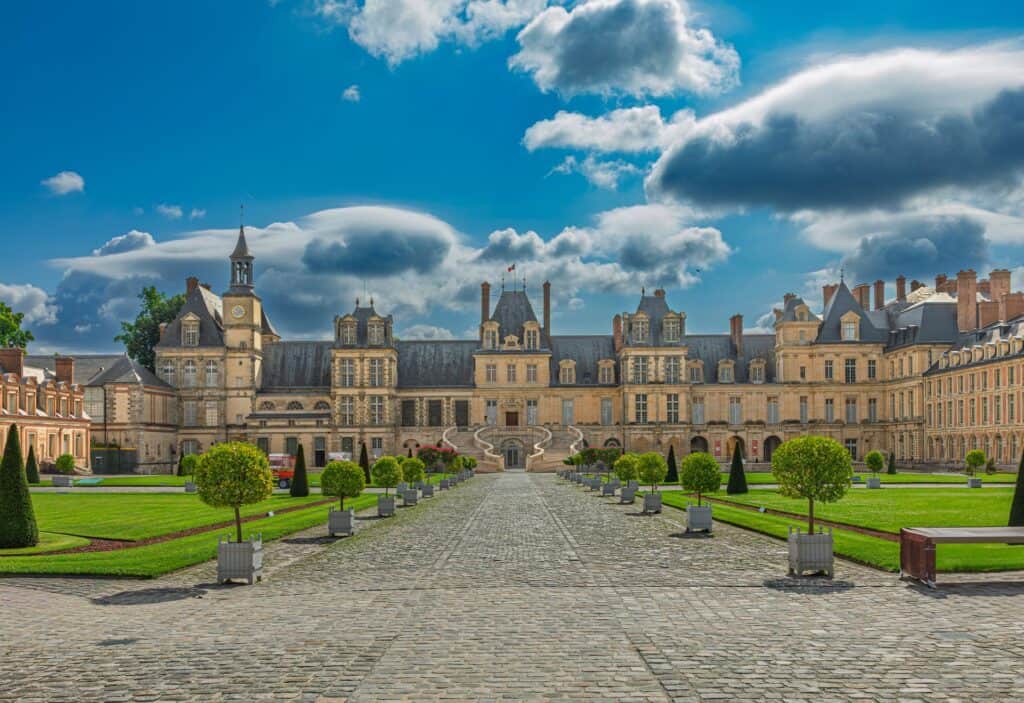
Last but not least: The Château de Fontainebleau. It is the only palace inhabited by all French sovereigns from the 12th to the 19th century. Where Versailles was the creation of one king’s ambition, the magnificent Fontainebleau accumulated across eight centuries, each ruler adding rooms, wings and decoration in the style of their age. With 1,500 rooms it is one of the largest châteaux in France and the most furnished in Europe.
François I commissioned the medieval palace to be completely rebuilt as a large residence, importing Italian artists including Rosso Fiorentino and Francesco Primaticcio to carry out the decoration. Later, Napoleon I abdicated here on 4 and 6 April 1814, delivering his famous farewell to the Old Guard before leaving for Elba. The Cour d’Honneur still bears the name it was given that day: the Farewell Courtyard. Set in a park of 130 hectares, the château contains the largest parterre garden in Europe at 11 hectares, designed by André Le Nôtre.
Admission €14. Open every day except Tuesday, 1 January, 1 May and 25 December. Train from Gare de Lyon, 40 minutes.
Official website: www.chateaudefontainebleau.fr