You may well know William Morris as the designer of the most beloved wallpaper patterns from Victorian Britain. But did you know that his outrage at the botched restoration of a church led him to found the Society for the Protection of Ancient Buildings in 1877? A true ‘heritage hero’ from the past and a radical Victorian who taught Europe to restore its old buildings with respect.
Picture a stone farmhouse beside the upper Thames, its gardens running down to water meadows where little has changed in four centuries. Kelmscott Manor in Oxfordshire was William Morris’s idea of perfection. Not so much because it was grand, but because it was honest. Every stone had been laid by a craftsman who knew what he was doing. Nothing had been improved, updated, or made convenient. Morris rented it from 1871 until his death in 1896, and spent those years trying to persuade the rest of England to see buildings the way he saw this one.
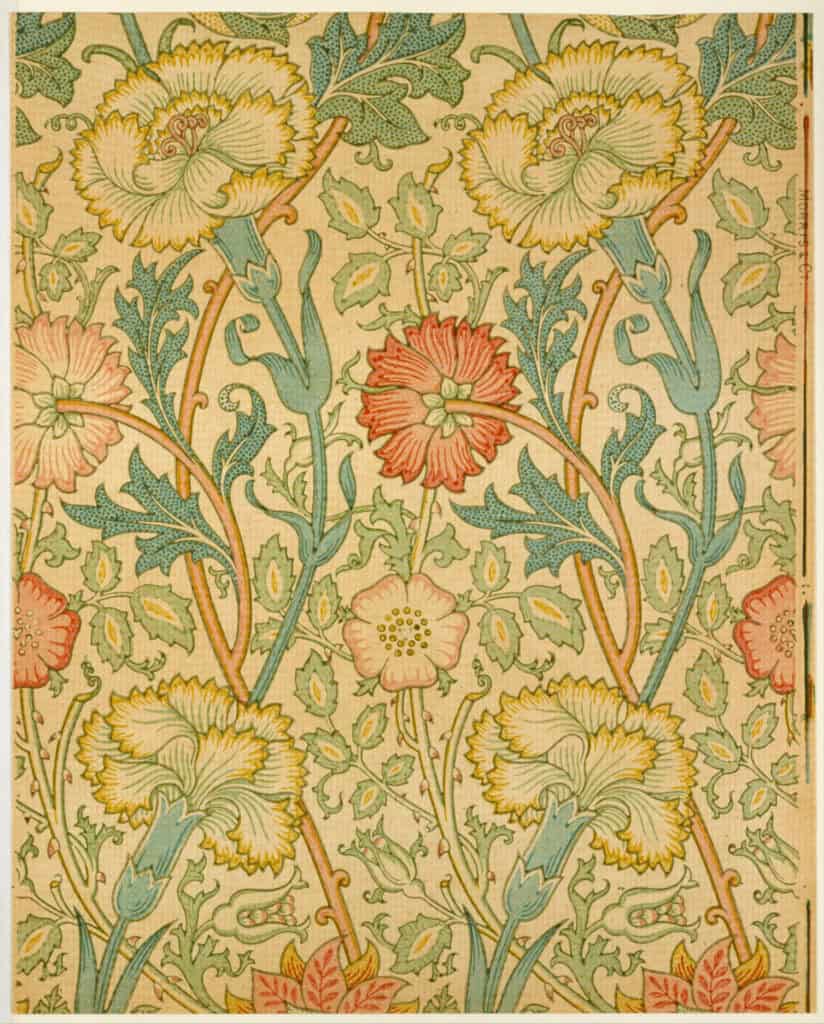
Morris (1834 – 1896) was not, on the surface, an obvious revolutionary. He came from a comfortable middle-class family, studied at Oxford, and went on to become one of the most successful designers of the Victorian age. His wallpapers, textiles, and typefaces are still in production today, still instantly recognisable, and still copied by hotels that want to suggest a certain Britishness. But beneath the floral patterns lay a rage that never subsided. The world around him destroyed the things he loved, even if it was with the best of intentions.
Why Morris declared war on Victorian restoration
In the England of Morris’s middle age, medieval churches were restored with immense enthusiasm and virtually without any restraint. Architects, foremost among them Sir Gilbert Scott, scraped centuries-old plaster from centuries-old walls, replaced worn masonry with gleaming new stones, installed Gothic windows that had never existed in the original, and called the result an improvement. For Morris, it was vandalism in professional guise. To him, the buildings that emerged from these restorations were forgeries, bearing the mark of their restorer’s imagination rather than the handprints of the original builders.
The breaking point came on a March morning in 1877, when Morris read over breakfast that the great Minster of Tewkesbury was to be subjected to the same treatment. His volcanic letter to The Athenaeum called for an association to be founded to keep watch on old monuments. Within a fortnight, the Society for the Protection of Ancient Buildings (SPAB) had held its first meeting, with Morris as secretary. Its members called it, with affectionate irreverence, Anti-Scrape.
“My eye just now caught the word `restoration’ in the morning paper, and, on looking closer, I saw that this time it is nothing less than the Minster of Tewkesbury that is to be destroyed by Sir Gilbert Scott. Is it altogether too late to do something to save it – it and whatever else beautiful or historical is still left us on the sites of the ancient buildings we were once so famous for?” (fragment of the Letter to The Athenaeum by Morris)
The manifesto Morris wrote for the new society remains one of the most elegant arguments ever made about the nature of heritage. Old buildings, he insisted, do not belong to their current owners. They belong to the generations that made them, and to the generations not yet born. We are only their temporary guardians. A guardian who replaces what time has worn away is not preserving history, he is erasing it, and writing his own name in its place.
Craft from the inside
What gave Morris’s arguments their particular authority was that he was not a theorist looking at buildings from the outside. He could walk into a medieval church and read it the way a fellow craftsman would. He understood what it had cost to build in skill, in time, in the particular knowledge that accumulates across generations of working with stone and timber. Morris was a craftsman who understood materials: the resistance of wood, the logic of a repeating pattern, the difference between something grown slowly and something manufactured quickly just to look the same. Kelmscott Press, established by Morris in 1891, produced books of such deliberate beauty that they changed what people thought typography could be. His firm, Morris & Co., put hand-craftsmanship back into interiors at a moment when the machine was making everything cheaper and uglier simultaneously.
Heritage as a political argument
If all this gives the impression that Morris was a conservative or a man with inherited tastes who defended his inherited privileges, then one has completely misunderstood him. He arrived at socialism via aesthetics, driven by the conviction that beauty was not a luxury reserved for those who could afford it, but a right that industrial capitalism was systematically destroying. The very same system that produced cheap, shoddy goods was tearing down old buildings and replacing them with new ones that lacked memory, character and craftsmanship. In Morris’s view, these two scandals were linked.
This is what makes Morris more than just a figure of his time. His argument was not that old things should be preserved simply because they are old, but that they bear witness to human craftsmanship which, once lost, cannot be restored. Every authentic medieval roof beam, every weathered stone threshold, every layer of lime wash applied by a forgotten hand, is evidence of how people lived and worked. Scraping these away in the name of tidiness amounts to destroying a document that can never be rewritten.
Why Morris still matters for European Heritage today
The questions Morris asked in 1877 are the questions every heritage institution in Europe is still asking: not just how do we preserve the past, but why, and for whom? His philosophy: repair rather than restore, conserve rather than recreate. This approach became the foundation of what we now call conservation ethics. It was directly influential on the National Trust when it acquired its first building, Alfriston Clergy House, in 1896. Every careful repair of a crumbling castle wall, every decision not to replace a worn stone floor with a reproduction, it all carries Morris’s fingerprints.
He was not always right. His vision of the medieval past was coloured by romantic longing, and his politics were sometimes muddled by nostalgia for a world that had never quite existed. But his instinct was sound, and the legacy is vast.
Kelmscott Manor

For the traveller who wants to understand Morris in three dimensions, Kelmscott Manor is the place to begin. Open to visitors between April and October, the house feels less like a museum than like a home whose owner has just stepped into the garden. The rooms are hung with textiles Morris designed himself. His books are on the shelves. The great bed in which he died is still there, carved with a verse from one of his own poems. Outside, the walled garden gives onto meadows that reach the Thames — the same view he painted in words, the same stillness he was defending when he wrote his furious letters.
From Kelmscott, the broader itinerary almost writes itself: Tewkesbury Abbey, whose west window Morris saved from an architect’s fantasy; the city churches of Christopher Wren in London, several of which survive partly because of SPAB pressure; the medieval streets of Oxford, where Morris formed the convictions that shaped everything that followed.
Buildings that owe their survival to William Morris
Morris and the SPAB did not win every battle. But from the Society’s earliest years, it intervened across Britain and beyond. These are among the buildings that carry his legacy in their walls:

Tewkesbury Abbey, Gloucestershire — The fury that started everything. The SPAB protested against plans to replace the original medieval tracery in the great Norman arch with an imaginary reconstruction. The scheme was abandoned, and the window that stands today is the one Morris fought to keep.

St Albans Abbey (now Cathedral), Hertfordshire — The case that gave the Society its early momentum and its name. Morris pleaded against what he called a rash and destructive restoration, and though he did not win every point, the campaign changed the terms of the debate permanently.
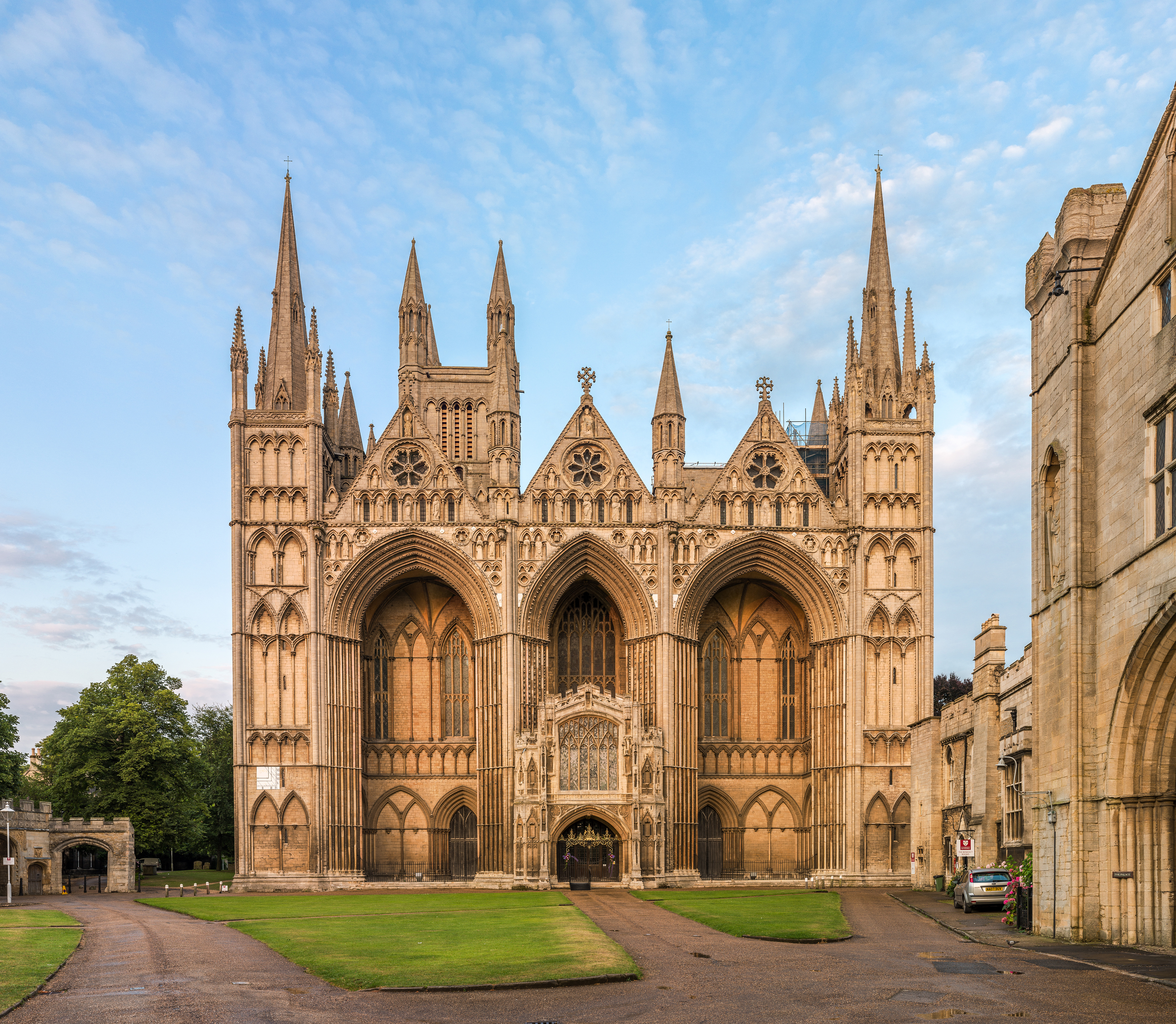
Peterborough Cathedral Tower — When the tower showed signs of structural failure, the SPAB urged the Dean and Chapter to shore it up and replace damaged stonework piece by piece, rather than demolish and rebuild. The approach they eventually adopted preserved the character of the medieval original.

St Mark’s Basilica, Venice — In 1879, the SPAB organised an international campaign against a proposal to rebuild the west front of the Basilica — one of the first times a British heritage body intervened on the Continent, and a sign of how Morris understood heritage as a European, not merely English, cause.

Christopher Wren’s City Churches, London — The SPAB campaigned vigorously against proposals to demolish several of Wren’s post-Fire churches in the City of London. Many still stand today, their interiors undisturbed, because enough people had been persuaded by Morris’s argument to make demolition politically impossible.
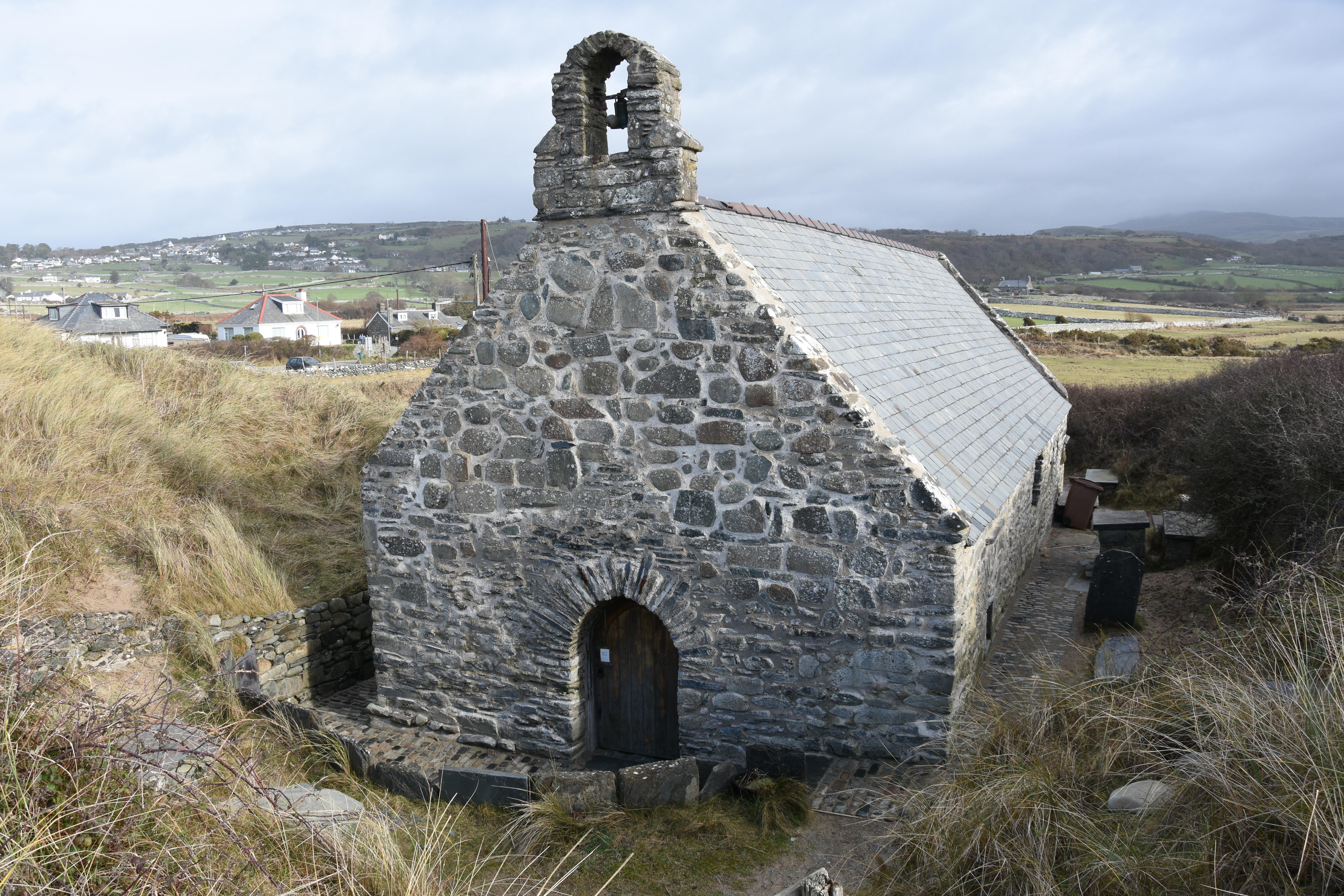
Llandanwg Chapel, near Harlech, Wales — A small, deserted medieval chapel in a landscape of exceptional beauty, saved when an anonymous donor placed funds at the SPAB’s disposal specifically for its repair. The kind of quiet victory that never makes the history books, but that Morris considered the whole point.
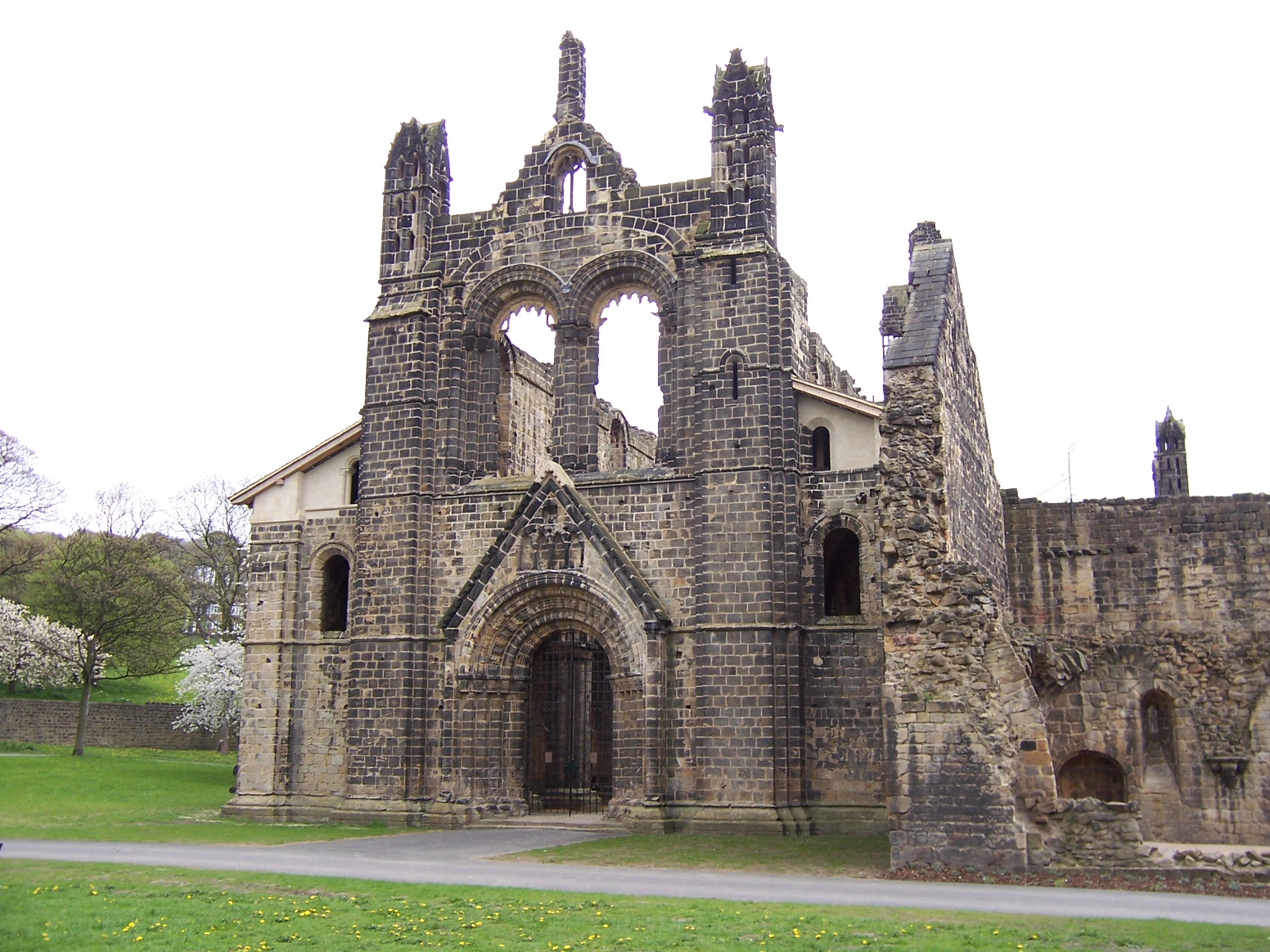
Kirkstall Abbey, Yorkshire — Among the ruined abbeys for which the SPAB sought protective maintenance rather than speculative reconstruction — the philosophy being that an honest ruin is more truthful, and more moving, than a rebuilt imitation of what once stood.

Bamborough Castle, Northumberland — Flagged in early SPAB casework as a building at risk from unsympathetic intervention, at a time when private owners across Britain were “improving” their medieval properties with more money than restraint.
The list does not end there. Today the SPAB remains a statutory consultee on all applications to demolish listed buildings in England and Wales, a legal role that is itself Morris’s longest-lasting legacy.
Heritage Heroes
Across Europe, historic houses, castles, and gardens survive not only through conservation policies and restoration budgets, but through people—individuals who translate heritage into lived experience. They act as interpreters between past and present, experts and audiences, stone and story. Some are historians, others curators, gardeners, or broadcasters. What unites them through time and space is their love for art, craftmanship and their ability to make heritage feel relevant, accessible, and emotionally resonant.
This series explores such ambassadors of European heritage: figures who have shaped public affection for historic places by the way they speak about them, move through them, and invite others inside. From palace corridors to walled gardens, from grand estates to working landscapes, these individuals remind us that heritage is not only something to be preserved, but something to be understood, used, and cared for.